


The Sustainability Story Behind Adaptogen Mushroom Blends: Sourcing, and Packaging Essentials

Introduction: Why Sustainability Matters for Adaptogen Mushroom Blends
Every time you scoop or sip your favorite adaptogen mushroom blend, a story unfolds—a story rooted in nature, responsible farming, and mindful choice. As adaptogen mushrooms become more popular in holistic wellness, understanding how they are sourced, grown, and packaged is key to making truly informed, sustainable choices. If you're a conscious consumer eager to align your wellness routine with planet-friendly values, exploring the sustainability story behind adaptogen mushroom blends helps you choose products that support both personal well-being and a healthier earth.
The Foundations of Sustainable Sourcing for Adaptogen Mushrooms
Sustainability begins where adaptogen mushrooms are sourced. This crucial step impacts ecosystem health, product purity, and long-term availability. Here’s how two major sourcing methods compare:
Wild-Harvested Mushrooms
Wild-harvesting involves collecting mushrooms from their native habitats like forests or woodlands. While this approach can preserve traditional harvesting wisdom and foster biodiversity, it also comes with challenges:
- Benefits:
- Maintains genetic diversity by allowing mushrooms to reproduce naturally
- Supports traditional knowledge and local livelihoods
- Considerations:
- Risk of over-harvesting, which can disrupt ecosystems
- Potential for contamination from unregulated environments
- Traceability can be more complex
Those interested in supporting ecosystem health might explore options such as our Bulk Herbs collection, which emphasizes traditional sourcing with a focus on quality.
Indoor or Cultivated Mushrooms
Indoor cultivation creates mushrooms in controlled environments such as greenhouses or vertical farms. This modern approach is transforming how adaptogen blends are made:
- Benefits:
- Consistent quality and safety
- Lower impact on wild populations
- Easier to certify organic and non-GMO status
- Considerations:
- Energy usage for temperature and humidity control
- Requires careful resource management for long-term sustainability
For those who prioritize organic and carefully managed cultivation, products such as the Mushroom Blend - Organic 15X Liquid Extract - Adaptogens align with these values.
Both wild-harvested and cultivated mushrooms have sustainability merits—it often comes down to transparency and the practices employed by individual farms or suppliers.
Fruiting Body vs. Mycelium: What Part is Used in Blends?
When shopping for adaptogen mushroom blends, you may notice terms like “fruiting body” and “mycelium” on ingredient lists. Understanding these can clarify sourcing and sustainability practices:
- Fruiting Body:
- The visible, above-ground part (cap and stem) used traditionally
- Contains a concentrated profile of naturally occurring compounds
- Harvesting is typically after full maturation
- Sourcing fruiting bodies can, in some cases, be gentler for indoor cultivated mushrooms where life cycles are closely managed
- Mycelium:
- The thread-like, underground network responsible for absorbing nutrients
- Often cultivated on grains or wood substrates
- Harvesting can happen earlier in the growth process and may result in different compound profiles
- Mycelium production often allows for year-round, scalable harvests
Some brands blend both parts for balance, but it’s important to check what’s in your jar or pouch—especially if you have preferences for either tradition or specific sourcing. For additional cognitive or mood herbal support, check out Lion's Mane Mushroom Liquid Extract - Organic - Brain & Mood, which spotlights the benefits of fruiting body extracts in a focused supplement.
Traceability: How to Know Where Your Mushrooms Come From
Modern consumers want to know not just what’s in their product, but where it comes from. Traceability is increasingly valued in the world of adaptogen mushrooms. But what does "traceability" really mean?
- Batch Tracking: Many reputable brands assign codes so that every blend can be traced back to its source farm or cultivation batch
- Transparency Reports: A few companies publish sourcing statements or sustainability assessments
- Questions to Ask:
- Where and how were these mushrooms grown or harvested?
- Are the growers paid a fair wage?
- What are the environmental practices in place?
Traceability isn't just about building trust—it’s also about empowering you to choose products that align with your values, such as blends that are clearly labeled and easy to research. Supporting brands with visible supply chains, like our organic herbal teas, can increase confidence in what you consume.
Certification Labels: What Do They Signify?
Navigating labels can be overwhelming, but understanding a few key certifications makes sustainable shopping easier:
- USDA Organic: Indicates mushrooms were grown without synthetic pesticides or fertilizers
- Non-GMO: Ensures genetic modification wasn’t used at any stage
- Fair Trade: Focuses on fair wages and working conditions for harvesters
- Certified Vegan: Confirms no animal products or by-products were involved
- Other Eco Labels: These can include Rainforest Alliance or specific regional standards focusing on biodiversity and worker welfare
Look for certification marks that matter most to you, and don’t hesitate to ask brands to clarify their practices. For example, Mushroom Blend - Organic 15X Liquid Extract - Adaptogens is certified organic and easily fits sustainable shopping checklists.
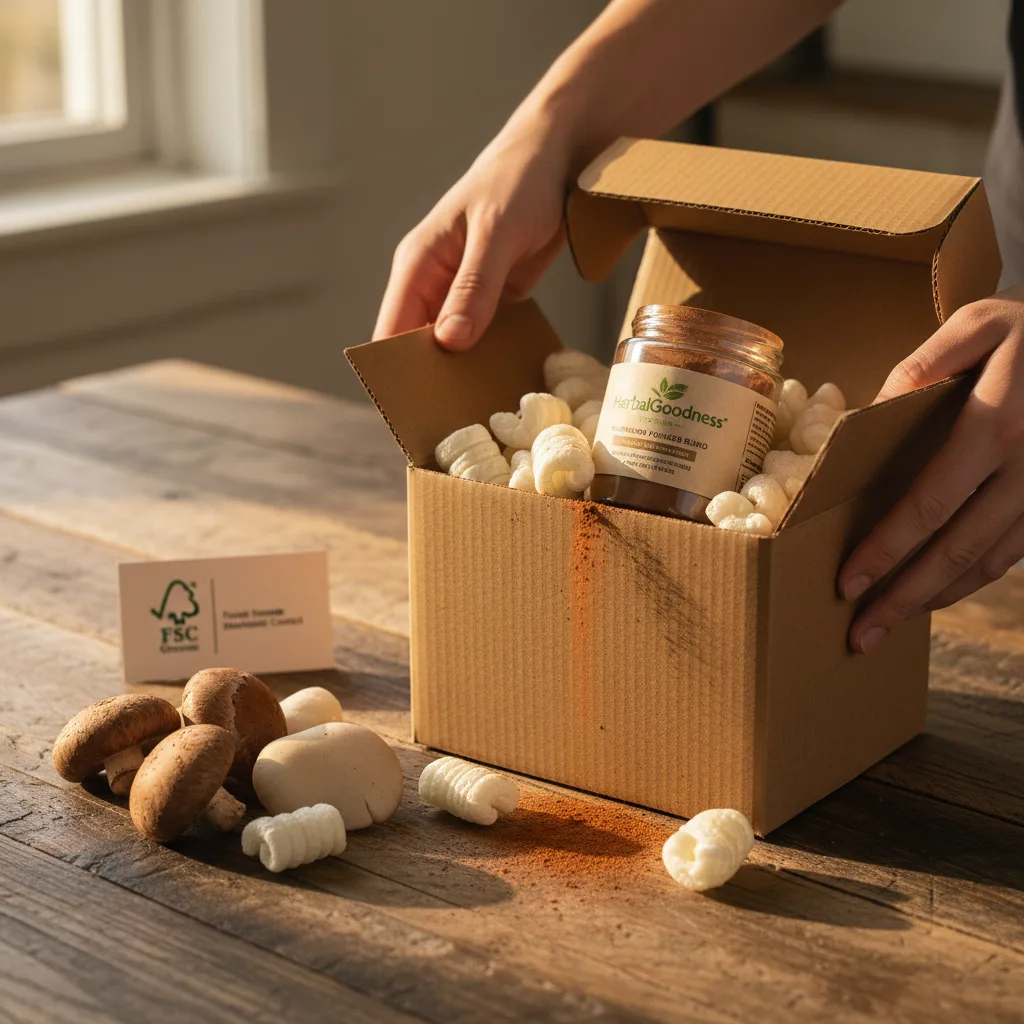
Packaging: Reducing Waste in Adaptogen Mushroom Blends
Packaging is the final stop before your adaptogen blend reaches your hands. How it’s designed and disposed of plays a vital role in sustainability.
Sustainable Packaging Options
- Recyclable Containers: Glass jars or bottles, as well as certain cleaned plastics, support recycling systems
- Compostable Pouches: Made from plant-based materials, these are designed to break down in industrial compost facilities
- Bulk Purchases: Ordering larger sizes reduces packaging waste per serving
Selecting our Bulk Herbs collection enables you to minimize individual packaging and promotes bulk buying habits that are greener for the planet.
What to Look For
- Is packaging clearly labeled as recyclable or compostable?
- Does the company minimize unnecessary wrappers, inserts, or plastics?
- Are refill options available to further reduce packaging waste?

Practical Questions to Ask Before You Buy
Before making your next adaptogen mushroom blend purchase, asking the right questions ensures your choice supports sustainability:
- Is this blend primarily fruiting body, mycelium, or both? Why?
- Where were the mushrooms grown—wild or indoor? How are ecosystems or communities supported?
- Can I trace the batch or see transparency reports?
- Which certifications back up your sustainability claims (Organic, Fair Trade, Non-GMO, etc.)?
- What kind of packaging is used? Is it easy to recycle or compost where I live?
Mindful questions signal to brands that sustainability matters to consumers and help shape better industry practices moving forward.

Simple Ways to Reduce Waste When Exploring Mushroom Blends
Sustainable living is about progress—not perfection. It’s possible to enjoy adaptogen mushroom blends while supporting low-waste and responsible habits. Here’s how:
- Start Small: If a blend is new to you, purchase the smallest available size to ensure you’ll use it
- Store Properly: Keep blends in airtight, cool, and dark spaces to maintain freshness and avoid spoilage
- Repurpose Containers: Use empty jars for pantry storage, crafts, or gifting herbs
- Share and Swap: If you have extra, consider sharing with a friend rather than letting it go unused
- Recycle and Compost: Rinse and place recyclable or compostable packaging in the correct bins
Trying wellness teas in bulk, such as our organic herbal teas, is another way to minimize packaging waste while exploring different blends.
These steps help maximize the sustainability of your wellness choices and minimize your environmental footprint. Choosing supplements with clean labels, like Lion's Mane Mushroom Liquid Extract - Organic - Brain & Mood, combines functional benefits with mindful waste reduction.
How Herbal Goodness Approaches Sustainability in Adaptogen Mushroom Blends
At Herbal Goodness, sustainability weaves through every stage of sourcing, blending, and packaging our adaptogen mushroom blends. Indoor cultivated mushrooms are often preferred to reduce pressure on wild ecosystems, while certifying partners for organic and ethical practices remains a clear priority. Packaging innovations and flexibility—from compostable pouches to bulk order options—make responsible consumption easier for our community. While sustainability is a collective journey, asking questions and seeking transparency ensures your wellness routine nurtures both personal vitality and the planet.
FAQs:
- What should I look for when buying sustainable adaptogen mushroom blends?
Look for details about mushroom sourcing (wild-harvest or indoor cultivation), preference for fruiting body or mycelium, batch traceability, reputable sustainability certifications, and eco-friendly packaging. These factors indicate a brand’s commitment to both quality and the environment.
- Why does the difference between fruiting body and mycelium matter in mushroom blends?
Fruiting bodies are the mature, above-ground parts traditionally sought after for rich compound profiles. Mycelium is the root-like network, sometimes cultivated for consistent harvests. Knowing which is used helps inform decisions about sourcing, traditional use, and sustainability.
- Are wild-harvested mushrooms always more sustainable than cultivated ones?
Not always. Both wild-harvest and cultivated approaches can use responsible or unsustainable practices. Indoor cultivation often has better traceability and lower risk of ecosystem disruption, while wild-harvesting supports biodiversity when done carefully.
- How do certification labels help with sustainable mushroom blend shopping?
Certification labels like USDA Organic, Non-GMO, and Fair Trade verify important sustainability and quality standards. They help confirm that products meet defined ecological and ethical criteria, making your purchase decision simpler and more reliable.
- What are some easy ways to reduce waste while trying different mushroom blends?
Purchase smaller sizes or samples, store products carefully to manage waste, reuse empty containers, share blends with friends, and ensure packaging is recycled or composted according to local guidelines.
- How does packaging affect the sustainability of adaptogen mushroom blends?
Sustainable packaging, such as recyclable glass, compostable pouches, or bulk options, minimizes waste and environmental impact. Responsible brands use packaging designed to protect freshness while supporting circular or low-waste systems.
Author Name:
Herbal Goodness Editorial Team
Author Bio:
The Herbal Goodness Editorial Team specializes in holistic health and superfoods, blending science and nature to educate and empower our community.
References:
Introducing Graviola to Young Taste Buds: Fun, Family-Friendly Flavor Exploration
Graviola in the Classroom and at Home: Creative Activities to Teach Kids About Tropical Plants