





Organic Papaya Leaf Extract: Trusted Research Sources & Buying Tips

When you first search for information about organic papaya leaf extract, the results can feel overwhelming—or unhelpful. Pages filled with dramatic claims and commercial pitches often pop up before any genuine insight. But if you’re genuinely curious about the origins, quality, and properties of organic papaya leaf extract, where should you begin? This guide offers a starter list of reliable, non-commercial resources to help you research this traditional botanical. You’ll discover how to evaluate what you find online, sift fact from fluff, and learn about the kinds of sources used by proactive, thoughtful shoppers—so you can feel informed and confident in your own herbal explorations.
Understanding Why Source Matters for Organic Papaya Leaf Extract Research
People researching organic papaya leaf extract often have one thing in common: the desire for neutral, accurate, and science-backed information. Non-commercial resources are especially valuable because they avoid sales language and often present data in plain English, making it easier to understand how this botanical is grown, sourced, and discussed in trusted scientific and regulatory circles. Evaluating the right information can help you make sense of product labels, marketing language, and broader industry terms—fostering a deeper sense of trust in your choices.
To better interpret product labels and terms used online, it is valuable to check ingredients lists and product certifications. For example, when exploring products such as Organic Papaya Leaf Extract 16oz | 15X Liquid – Best Value Size, reviewing both the official product page and independent analysis can reinforce your confidence in what you're buying.
What Makes a Resource Reliable? Key Criteria for Quality Herbal Information
To identify a credible resource for organic papaya leaf extract, consider:
- Non-commercial Focus: Resources should not directly sell products or link heavily to retail pages.
- Transparency: Does the source clearly state its methods, authors, or data sources?
- Expertise: Is the site maintained by scientists, regulatory bodies, universities, or trusted botanical organizations?
- Plain Language Support: Are technical terms explained? Is there a glossary or consumer guide section?
- Accessibility: Is the information open-access (free for all), or is it locked behind a paywall or sign-up?
Keeping these points in mind helps you recognize objective, reliable voices in the online conversation about organic papaya leaf extract. Pairing these research practices with supplement options like Papaya Leaf Extract 10X Capsules 600mg | Platelet & Digestive Aid can help distinguish quality-backed products from heavily commercialized ones.
Botanical Databases: Science-Driven Profiles for Organic Papaya Leaf
For unbiased, plant-specific information:
- USDA PLANTS Database: Offers detailed species information, taxonomy, distribution, and plant characteristics. While technical, it anchors the basics about Carica papaya and its known uses.
- Kew Science – Plants of the World Online: Provides global botanical perspectives, including growth behavior and verified nomenclature, supporting international research on papaya leaf.
These resources help clarify botanical distinctions (such as wild vs. cultivated papaya), which is especially useful when trying to understand the nuances of “organic” in herbal products, or what differentiates supplements like Blood Platelet Plus Capsules 20X | 60ct – Advanced Platelet Formula.
Organic Certification Bodies: Verifying Standards and Label Claims
If you want to understand what “organic” means for papaya leaf extracts, look to the certifying organizations. Their resources clarify growing, harvesting, and processing protocols for certified organic botanicals:
- USDA Organic: Explains what’s required for a “USDA Organic” seal, from soil management to non-synthetic processing.
- Organic Trade Association (OTA): Offers consumer-friendly guides on certified organic ingredients and the standards used across the herbal supplement industry.
Checking materials and seal information can help you separate authentic, properly labeled products from those which only claim to be organic. It also supports more informed selection of specialty items such as Organic Papaya Leaf Tea | 24 Premium Bags – Caffeine-Free.
Open-Access Journals: Unfiltered Science You Can Read Online
Transparent, peer-reviewed articles offer some of the most rigorous information about organic papaya leaf extract’s phytochemical content, harvesting techniques, and potential uses (presented in a factual, non-therapeutic context).
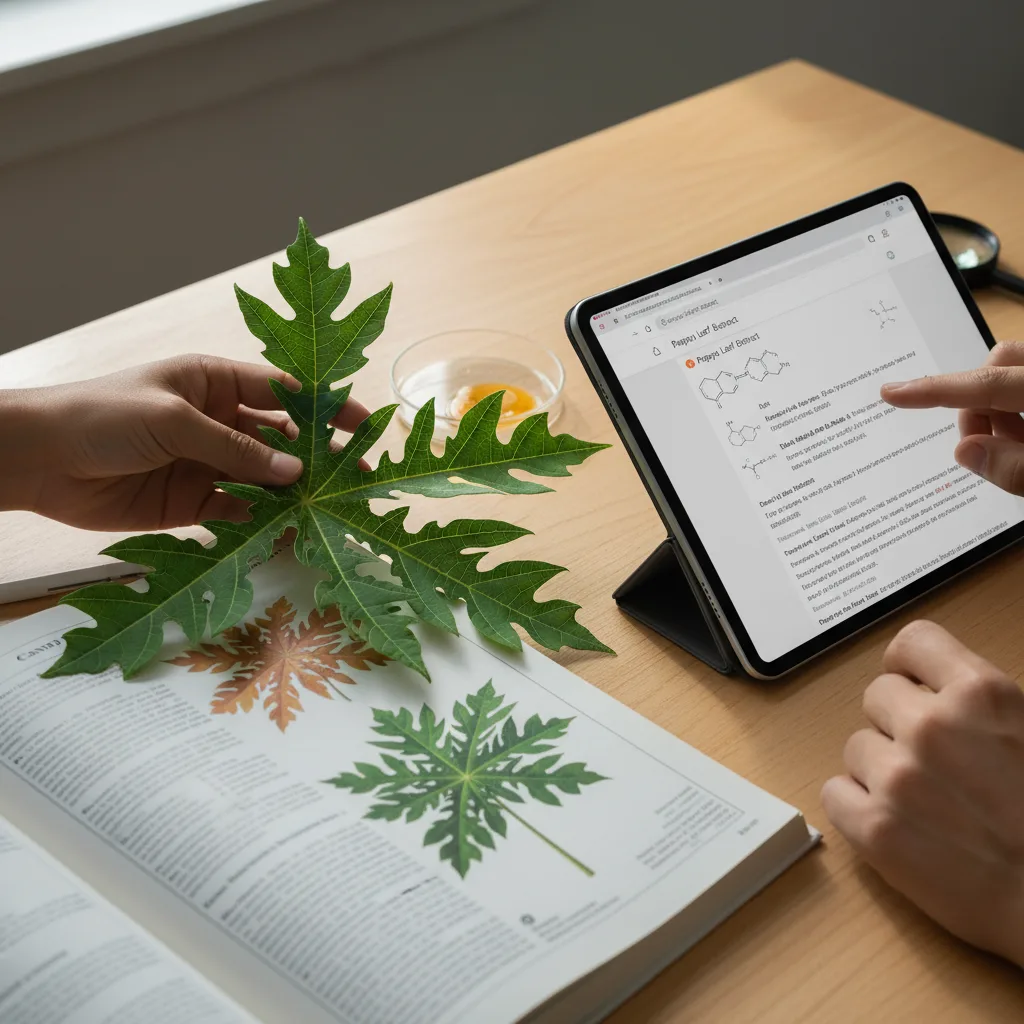
- PubMed Central: Search for “organic papaya leaf extract” and filter for free full-text options. You’ll find studies on extraction methods, phytochemistry, and safety data, offered by academic and public health experts.
- Directory of Open Access Journals (DOAJ): Includes global open-access journals where you can search botanical studies and consumer research on papaya leaf.
While scientific articles can be technical, they frequently include summaries and plain-English abstracts you can review before deciding if further reading will be helpful. These summaries help you compare brands or evaluate specifics, as might arise if you want to know more about an item such as Blood Platelet Support with Papaya Leaf | Organic 15X Liquid Extract.
Consumer Testing Organizations: Independent Insights Into Purity and Quality
With herbal supplements in particular, consumers value transparency in sourcing, purity, and product identity. Here’s where independent product-testing bodies shine:
- ConsumerLab: Though some content is subscription-based, ConsumerLab conducts laboratory testing and publishes reports on the content and purity of herbal supplements, including papaya leaf extract.
- NSF International: Reviews and certifies dietary supplements for ingredient authenticity, providing public listings (look for company or product names rather than individual ingredients).
When considering any botanical supplement for wellness—such as the trusted Organic Papaya Leaf Extract 1oz | 15X Liquid – Trial & Travel Size—look for transparency, independently reviewed results, and clear product compositions. Cross-referencing product information with independent testing can be particularly reassuring.

Reading and Understanding COAs: Plain-English Glossaries and Guidance
A Certificate of Analysis (COA) is a vital technical document that proves a product’s content and purity. Decoding COAs can help clarify exactly what’s in that organic papaya leaf extract—and ensure what’s printed on the label matches lab findings.
Trustworthy resources include:
- USP (U.S. Pharmacopeia): Provides guidance on what information to expect on a COA for dietary supplements. Their consumer guides break down categories such as active compounds, contaminants, and testing methodology.
- AOAC International: Offers consumer-accessible primers on analytical methods and terminology found in laboratory reports.
It’s smart to use glossaries or template guides from certification bodies to boost your confidence when reviewing COAs—even before you consider your first purchase. This habit is equally valuable if you are considering options ranging from traditional liquid extracts to innovative forms, much like with Papaya Leaf Extract Capsules 600mg | 10X Strength – Platelet Support.

Evaluating Product Pages & Online Claims: Spotting Red Flags and Misleading Sources
Even with the best resources, learning to “read between the lines” of online product pages is essential. Here are some practices to help you separate trustworthy information from promotional noise:
- Prioritize Non-Commercial Sources: If a product or article is packed with ‘buy now’ links, sponsored content, or lacks clear citations, use caution.
- Look for Consistency With Certifying Body Standards: Do product claims align with what you’ve learned from USDA Organic or other certification references?
- Check for Transparent COAs: Genuine brands or educational resources should provide third-party COAs or, at minimum, explain how their testing is conducted.
- Mind the Language: Be wary of exaggerated, sensational claims and words that guarantee absolute outcomes. Good resources use measured, transparent wording.
When evaluating a supplement, compare the language and presentation to trusted options such as Organic Papaya Seed Extract 15X Liquid | Gut & Colon Cleanse Support to confirm the presence of legitimate testing and certification details.
Frequently Updated Resources: Staying Current With Organic Papaya Leaf Research
As interest grows in the world of organic botanicals, new research and regulatory changes are added to existing databases and journals. Bookmarking a handful of these trusted portals (like USDA and PubMed Central) can make staying updated easier, and subscribing to e-newsletters from organizations like OTA can provide timely alerts without unwanted promotional messaging.
Whether you’re reading a scientific review, checking a brand’s website, or examining a COA, these habits foster lasting confidence in evaluating organic papaya leaf extract—and botanical products as a whole. Refer to reputable web pages when searching for a quality Organic Papaya Leaf Tea | 24 Premium Bags – Caffeine-Free or when comparing ingredients in similar offerings.
Next Steps: Building Your Own Herbal Resource Library
With this starter list in hand, you’re ready to move from passive consumer to informed researcher. Trustworthy information about organic papaya leaf extract is available—and accessible—when you know where to look. Over time, you may choose to expand your resource list by exploring additional reputable journals, government nutrition portals, or university extension programs. Every new, non-commercial perspective adds clarity, empowering you to make the best choices for your curiosity and wellness journey.
Frequently Asked Questions
Question 1: How do I tell if organic papaya leaf extract is truly organic?
Answer: Look for products with verified certification, such as a USDA Organic seal, and double-check that the brand provides transparent sourcing and independent testing. For instance, Organic Papaya Leaf Extract 16oz | 15X Liquid – Best Value Size displays its organic certification for consumer reassurance.
Question 2: Where should I begin my research on papaya leaf extract?
Answer: Start with trusted, non-commercial resources and official botanical databases. Consider reference points provided in the article, and supplement your reading with consumer-tested products like Papaya Leaf Extract 10X Capsules 600mg | Platelet & Digestive Aid.
Question 3: What is a Certificate of Analysis (COA) and why does it matter?
Answer: A COA is a technical document verifying a product’s content and purity. It confirms that what’s on the label matches what’s inside the package. Reviewing a COA is especially important when purchasing supplements such as Blood Platelet Plus Capsules 20X | 60ct – Advanced Platelet Formula.
Question 4: Are peer-reviewed studies on papaya leaf extract freely available?
Answer: Yes, platforms like PubMed Central and DOAJ house open-access botanical studies. Many product pages, including Blood Platelet Support with Papaya Leaf | Organic 15X Liquid Extract, will link to or cite relevant research.
Question 5: What distinguishes a truly transparent supplement brand?
Answer: A transparent brand provides sourcing details, shares third-party test results, and publishes COAs. Quality supplements such as Organic Papaya Leaf Extract 1oz | 15X Liquid – Trial & Travel Size often describe their testing and quality control.
Question 6: How frequently is new research on organic botanicals released?
Answer: Research is continually updated. Staying informed by subscribing to updates from trusted resources and by revisiting reliable products such as Organic Papaya Seed Extract 15X Liquid | Gut & Colon Cleanse Support is a great way to keep current.
Question 7: Can tea be a good form of papaya leaf supplementation?
Answer: Yes, as long as it’s from a trusted source with clear labeling, like Organic Papaya Leaf Tea | 24 Premium Bags – Caffeine-Free. Tea offers a gentle and convenient way to enjoy the properties of papaya leaf.
Curious to go deeper? Explore the recommended resources, build your personal list, and approach each organic papaya leaf extract purchase with informed confidence.
About the Author
Herbal Goodness Editorial Team
The Herbal Goodness Editorial Team specializes in holistic health and superfoods, blending science and nature to educate and empower our community.
Related blogs:
Tropical vs. Hardy Hibiscus: Visual Guide for Beginner Gardeners – Herbal Goodness
Ordering Chanca Piedra Capsules Online? Multilingual Guide to Names an – Herbal Goodness
How to Set Up Local Alerts and Smart Searches to Find Soursop Bitters – Herbal Goodness
Mushroom Blends and Seasonal Rituals: A Beginner’s Guide to Traditiona – Herbal Goodness
Buying Dried Lavender Flowers in Bulk: Beginner’s Guide to Quality, St – Herbal Goodness
Papaya Leaf Powder: From Harvest to Home—Production, Storage, and Uses – Herbal Goodness