





Low-Waste Tea Ritual: Sustainable Tips for a Relaxing Bedtime

A soothing cup of tea before bed can signal relaxation and invite deep rest, but the way you prepare and enjoy your nightly blend matters too—for both your well-being and the environment. By adopting a low-waste bedtime tea ritual, you can unwind with intention, support sustainable practices, and enjoy each sip with a clear conscience. Creating such a ritual means making small choices—from how you select your herbs to the way you brew and dispose of your tea—that collectively reduce waste and enhance the calming effect of your tea routine.
Embracing Sustainability in Your Evening Tea Ritual
An eco-friendly bedtime tea ritual starts with a commitment to sustainability in every step. Focusing on the origins of your tea, how it's packaged, and how it's brewed not only supports a greener planet but also deepens the sensorial pleasure and mindfulness of your nightly wind-down.
Why Low-Waste Matters for Tea Lovers
Conventional tea habits can contribute to unnecessary waste—single-use tea bags, foil wrappers, and non-compostable packaging add up over time. Small swaps and mindful choices help minimize your environmental impact, nurture a gentle routine, and create a more intentional evening wind-down. This approach encourages:
- Lower landfill waste through compostable or reusable packaging
- Support for ethical, sustainably harvested herbs
- Smarter resource use through minimal, plastic-free brewing tools
- A switch from disposable to long-lasting, planet-friendly accessories
For those who want to directly support eco-friendly tea brands, the Organic Papaya Leaf Tea | 24 Premium Bags – Caffeine-Free stands out with its thoughtfully sourced, environmentally gentle packaging, aligning perfectly with low-waste values.
Choosing Sleep & Relaxation Teas with Low Impact
The foundation of every cup is the herb selection. For a restful bedtime ritual, look for tea blends that use sustainably sourced ingredients. Herbs like chamomile, lemon balm, lavender, and passionflower are classic choices, traditionally valued for their calming qualities and gentle flavors.
When prioritizing eco-conscious supply chains, you can also explore options like Soursop Leaf Tea | Organic Graviola 24 Bags | Soursop Tea Benefits for Immunity & Wellness, which features carefully harvested leaves and plastic-free packaging.
Identifying Sustainably Sourced Herbs
When shopping for bedtime teas:
- Choose products labeled as organic or wild-harvested
- Check if the brand publicly shares details about farm practices and labor standards
- Look for third-party certifications such as USDA Organic, Fair Trade, or Regenerative Organic
- Explore small-batch companies with a strong commitment to sustainable sourcing, like Herbal Goodness, which focuses on eco-conscious supply chains
Understanding the Impact of Packaging
Packaging can be a large source of waste in the tea industry. Most conventional tea bags are sealed in plastic, with extra layers of foil or individual wrappers. Eco-minded tea brands now offer:
- Compostable tea bags made of plant fibers (such as abaca or cornstarch)
- Minimal or plastic-free shipping materials
- Recyclable or biodegradable pouches and tins
- Bulk loose-leaf options to cut down on single-use packaging
For those looking for versatility and bulk options, Bulk Herbs & Roots Online for Tea, Tinctures & DIY Wellness - Organic 4oz Bags makes it simple to purchase herbal teas while minimizing packaging waste.
Comparing Loose-Leaf, Tea Bags, and Single-Serve Choices
Loose-Leaf Tea: Minimal Waste and Maximum Control
Loose-leaf tea often shines as the lowest-waste option. It usually comes in bulk, allowing you to purchase just what you need, and is frequently sold in recyclable, reusable, or compostable packaging. Brewing loose-leaf tea means skipping unnecessary wrappers and getting closer to the source.
Pros:
- Less packaging per serving
- Customizable portions and blends
- Usually fresher and more aromatic
Cons:
- Requires a strainer, infuser, or teapot—ideally made from stainless steel or reusable materials
- May take slightly longer than dropping a bag in a cup
Additionally, Bulk Loose Leaf Teas & Tisanes - Organic 4oz - Herbal Wellness Teas provides endless blend customization for relaxation and taste preference while further reducing single-use packaging.
Traditional Tea Bags: Convenience Meets Eco-Progress
Tea bags are convenient for busy evenings, but not all are created equal. Seek out brands that offer plastic-free, home-compostable tea bags sealed with natural fibers instead of heat-sealed plastics.
Pros:
- Easy cleanup and single-serve simplicity
- Ideal for those new to sustainable rituals
Cons:
- Some bags contain microplastics or non-biodegradable adhesives
- Individual wrappers add waste (unless paper or plant-based)
If you need both convenience and eco-friendly assurance, Soursop Leaf Tea | Organic Graviola 24 Bags | Soursop Tea Benefits for Immunity & Wellness balances these two factors beautifully, making it an excellent staple for your nightly tea regimen.
Single-Serve Sachets and Pods: Reducing Footprint
Single-serve packages—like ready-to-steep sachets or pods—offer controlled portions but may generate more waste. Look for innovation in this area: some brands now use compostable or recyclable pods, or offer return-to-recycle programs.
- Always verify material composition and disposal instructions
- Prioritize fully compostable or paper-based pod options
- Avoid plastic-based pods whenever possible
Brewing for the Planet: Simple Low-Waste Methods
How you brew your tea can make a meaningful difference in your routine’s sustainability. Minimalism and mindfulness go hand-in-hand with eco-friendly practices.
Eco-Friendly Brewing Tools
- Stainless steel infusers: Long-lasting and dishwasher safe
- Bamboo tea strainers: Renewable and biodegradable
- Ceramic or glass teapots: Enduring, non-reactive, and plastic-free
Avoid single-use or disposable infusers, and invest in quality tools that will last for years.
Reducing Water Waste
- Boil only as much water as you’ll use to save energy
- Use leftover hot water to pre-warm mugs or steep another serving
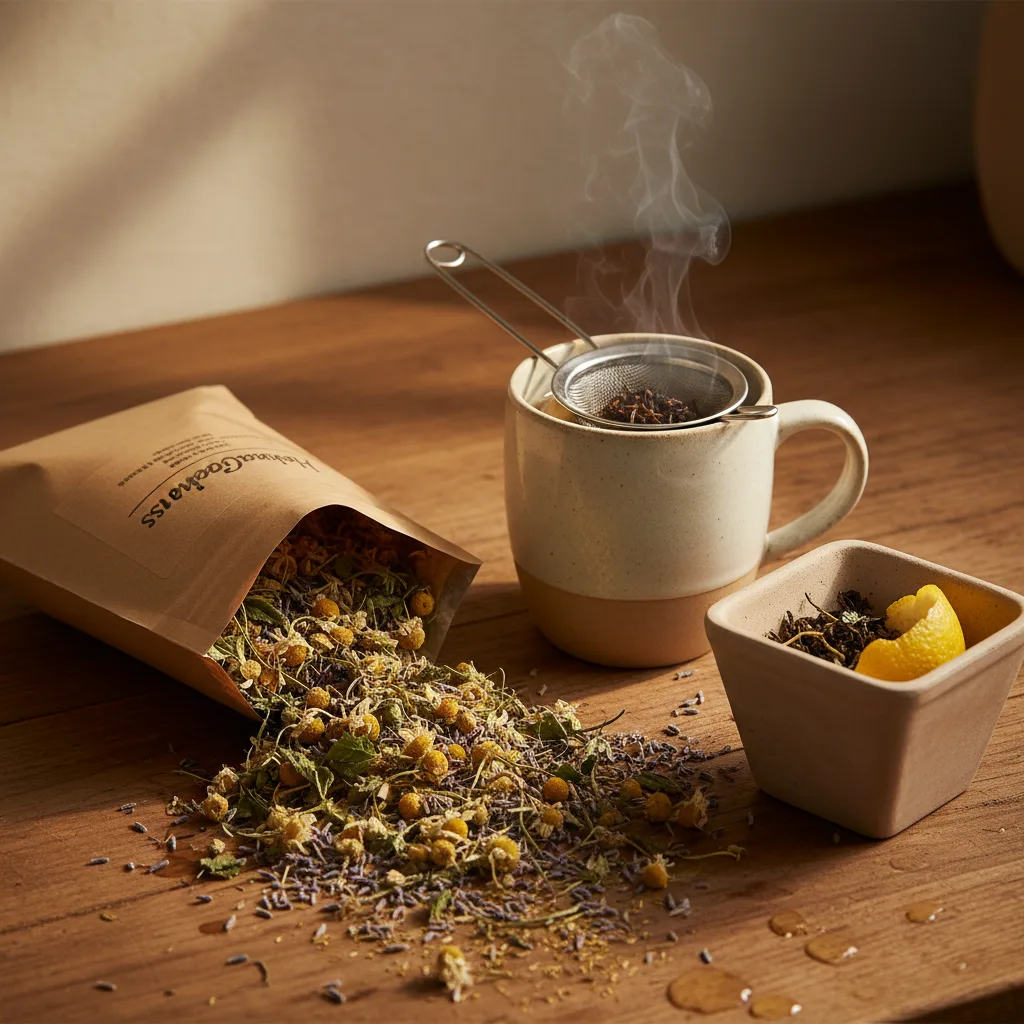
Mindful Storage and Freshness without Plastic
Proper storage keeps herbs fresh while minimizing waste. Skip single-use plastic containers and choose more sustainable options:
- Airtight glass jars: Preserve aroma and prevent moisture
- Stainless steel tins: Durable and fully recyclable
- Compostable kraft paper bags: Great for short-term storage
Label your teas clearly and store them in a cool, dry spot away from light for optimal taste and longevity. Freshness is key, especially for household favorites like the Organic Papaya Leaf Tea | 24 Premium Bags – Caffeine-Free, ensuring every cup remains vibrant.
The Ritual: Enhancing Relaxation and Reducing Waste, Step by Step
A low-waste bedtime tea practice engages more than just the sense of taste. It’s an opportunity to slow down, savor a mindful rhythm, and reflect on daily choices.
Building the Sensory Ritual
- Preparation:
- Select a calming, sustainably sourced herbal blend.
- Measure your tea with a reusable scoop—or simply use your hand.
- Brewing:
- Choose your favorite eco-friendly infuser or teapot.
- Boil just enough water and let the tea steep undisturbed.
- Savoring:
- Find a quiet space, breathe deeply, and focus on the aroma and warmth in your hands.
- Let the natural flavors and scents mark the transition to rest.
- Cleanup:
- Compost spent leaves or scrub your infuser for reuse.
- Rinse your mug or teapot with minimal water.
- Reflection:
- Notice the gentle act of caring for yourself and the environment in one small evening moment.

Developing a ritual centered on products like Soursop Leaf Tea | Organic Graviola 24 Bags | Soursop Tea Benefits for Immunity & Wellness can heighten the sense of comfort and sustainability in your nightly routine.
Repurposing and Composting: Extending the Life of Your Bedtime Tea
One of the most rewarding aspects of low-waste tea rituals is finding new uses for what’s left behind. Spent herbs and tea bags can enrich soil or nurture plants.
- Compost spent herbs, tea leaves, and compostable bags in your backyard or community bin
- Sprinkle used tea leaves around acid-loving plants as a gentle boost to the soil
- Use cooled, strained herbal water to nourish potted plants
For DIY herbal projects, consider Bulk Herbs & Roots Online for Tea, Tinctures & DIY Wellness - Organic 4oz Bags as an eco-friendly source for experimenting beyond the cup.

Always check your packaging’s compostability—some tea bags contain synthetic fibers and belong in the trash, not the compost pile.
Low-Waste Tea Rituals: An Ongoing Journey
Crafting a sustainable, calming bedtime tea ritual is a rewarding practice that grows richer and more meaningful over time. Celebrate each small step—choosing loose-leaf over single-use bags, supporting ethical growers, or composting spent tea—as a compassionate act for yourself and the earth. As your nightly ritual evolves, you may find deeper relaxation, heightened sensory pleasure, and a renewed sense of accountability to both your well-being and the world around you.
Frequently Asked Questions
Question 1: Which teas are best for a sustainable bedtime ritual?
Answer: Teas crafted from sustainably sourced herbs, such as Organic Papaya Leaf Tea | 24 Premium Bags – Caffeine-Free and Soursop Leaf Tea | Organic Graviola 24 Bags | Soursop Tea Benefits for Immunity & Wellness, are ideal for eco-friendly bedtime routines.
Question 2: How can I minimize packaging waste with my tea habit?
Answer: Choose bulk loose-leaf options, like Bulk Herbs & Roots Online for Tea, Tinctures & DIY Wellness - Organic 4oz Bags or compostable tea bag brands and store teas in glass jars or stainless-steel tins.
Question 3: What are some eco-friendly tools for brewing bedtime tea?
Answer: Reusable stainless steel infusers, bamboo tea strainers, and ceramic teapots are excellent, long-lasting options. Pair these with sustainable teas, such as Bulk Loose Leaf Teas & Tisanes - Organic 4oz - Herbal Wellness Teas.
Question 4: Are there eco-conscious options for those who prefer convenience?
Answer: Yes, opt for products with compostable, plastic-free tea bags, such as Soursop Leaf Tea | Organic Graviola 24 Bags | Soursop Tea Benefits for Immunity & Wellness, to combine ease and sustainability.
Question 5: How should I store my herbal teas to maintain freshness and sustainability?
Answer: Use airtight glass jars or stainless steel tins for storage, and prioritize teas sold in recyclable or compostable packages, such as Organic Papaya Leaf Tea | 24 Premium Bags – Caffeine-Free.
Question 6: What can I do with used tea leaves and bags to avoid waste?
Answer: Compost spent herbs and compostable bags, or sprinkle used tea leaves around acid-loving plants. For more DIY sustainability, try Bulk Herbs & Roots Online for Tea, Tinctures & DIY Wellness - Organic 4oz Bags.
Ready to refresh your bedtime? Consider switching to sustainably sourced teas and eco-friendly tools for your evening wind-down. Each mindful cup is a step toward a calmer night and a healthier planet.
About the Author
Herbal Goodness Editorial Team
The Herbal Goodness Editorial Team specializes in holistic health and superfoods, blending science and nature to educate and empower our community.
References
Safety & Smarts: A Beginner’s Guide to Choosing Concentrated Herbal Hair‑Support Formulas
Sensing Freshness: A Beginner’s Guide to Organic Rhodiola Liquid Supplements
Sleep on the Road: How to Choose and Pack Liquid Sleep Extracts for Travel
Spotting Red Flags When Searching 'Buy Chanca Piedra 10X Extract Capsules
Travel-Friendly Guide: How to Buy and Pack Adaptogenic Mushroom Liquid Extracts Online