


How to Organic Mullein Tea That Supports Pollinators: A Shopper’s Guide

Mullein tea has grown in popularity among wellness enthusiasts seeking organic and eco-conscious options. For shoppers who care about the environment, it’s not just the mullein that matters—but also how that mullein is grown. Supporting pollinator-friendly farming when buying organic mullein tea makes a real difference, benefiting both tea quality and the health of our planet’s vital pollinators. This guide shows you how to evaluate mullein tea choices with pollinators in mind, giving you simple yet impactful steps to shop with purpose.
Why Pollinator-Friendly Farming Matters for Organic Mullein Tea
Pollinators—including bees, butterflies, and hummingbirds—play a crucial role in healthy ecosystems. Their work fosters diversity, resilience, and vibrancy in farms and wildlands alike. When organic mullein is grown alongside practices that nurture pollinators, the ripple effects include:
- Improved farm biodiversity: Healthy pollinator populations support a wider range of plants and beneficial insects.
- Sustainable land stewardship: Practices like planting hedgerows and reducing chemicals improve soil, water, and air quality.
- Enhanced herbal quality: Biodiverse fields and healthy pollinators may contribute to more robust, thriving mullein plants.
- Support for global pollinator health: By buying from pollinator-friendly farms, consumers contribute to reversing pollinator declines.
Choosing organic mullein tea sourced from these farms reflects an investment in both personal wellness and global ecological well-being.
What Makes Organic Mullein Tea Pollinator-Friendly?
Navigating herbal tea labels and listings can be daunting, but understanding specific agricultural practices helps. Pollinator-friendly organic mullein tea often comes from farms that prioritize:
Limited or No Synthetic Inputs
Organic mullein tea should come from mullein grown without synthetic pesticides, fungicides, or herbicides. This protects pollinators from harmful chemical exposure and preserves beneficial insect habitats. Similarly, when choosing products like Organic Papaya Leaf Extract 16oz | 15X Liquid – Best Value Size, it's worthwhile to ensure that the extract is sourced from certified organic farms supporting similar eco-conscious standards.
Diverse Plantings and Habitat Buffers
Pollinator-friendly farms often:
- Plant wildflower strips, cover crops, or flowering hedgerows near mullein fields
- Maintain natural or semi-natural habitats (like trees, shrubs, or grasslands)
- Rotate crops and integrate companion planting
These strategies provide nesting, food, and shelter for various pollinator species year-round. Herbal wellness products originating on biodiversity-first farms, such as Papaya Leaf Blood Support Capsules 10X | 60ct – Platelet Wellness, reinforce the positive connection between nature and nutrition.
Ethical Harvesting and Soil Health
Farms focused on pollinator wellbeing tend to:
- Rotate harvests or leave some mullein flowers unharvested to support pollinator food sources
- Avoid tilling or disturbing soil excessively, preserving underground pollinator habitat
- Use compost, mulches, or other organic soil amendments
Certifications and Third-Party Verifications
While not all pollinator-friendly farms are certified, look for respected seals like:
- USDA Organic: Indicates the absence of synthetic inputs and basic habitats improvement, but doesn’t always guarantee direct pollinator-friendly initiatives
- Bee Better Certified: A specialized seal focused on pollinator habitat and protection
- Non-GMO Project Verified: Adds assurance about farming practices, but is not a pollinator certification on its own
How to Read Organic Mullein Tea Listings for Pollinator Impact
Labels and listings are your starting point when searching for pollinator-friendly mullein tea. Here’s what to look for:
Scan for Key Words on Packaging
- “Pollinator-friendly,” “bee-friendly,” “sustainably farmed,” “biodiverse,” or “wildcrafted”
- Certifications beyond standard organic, such as Bee Friendly Farming or Rainforest Alliance
- Mentions of floral buffers, cover crops, or pollinator conservation programs
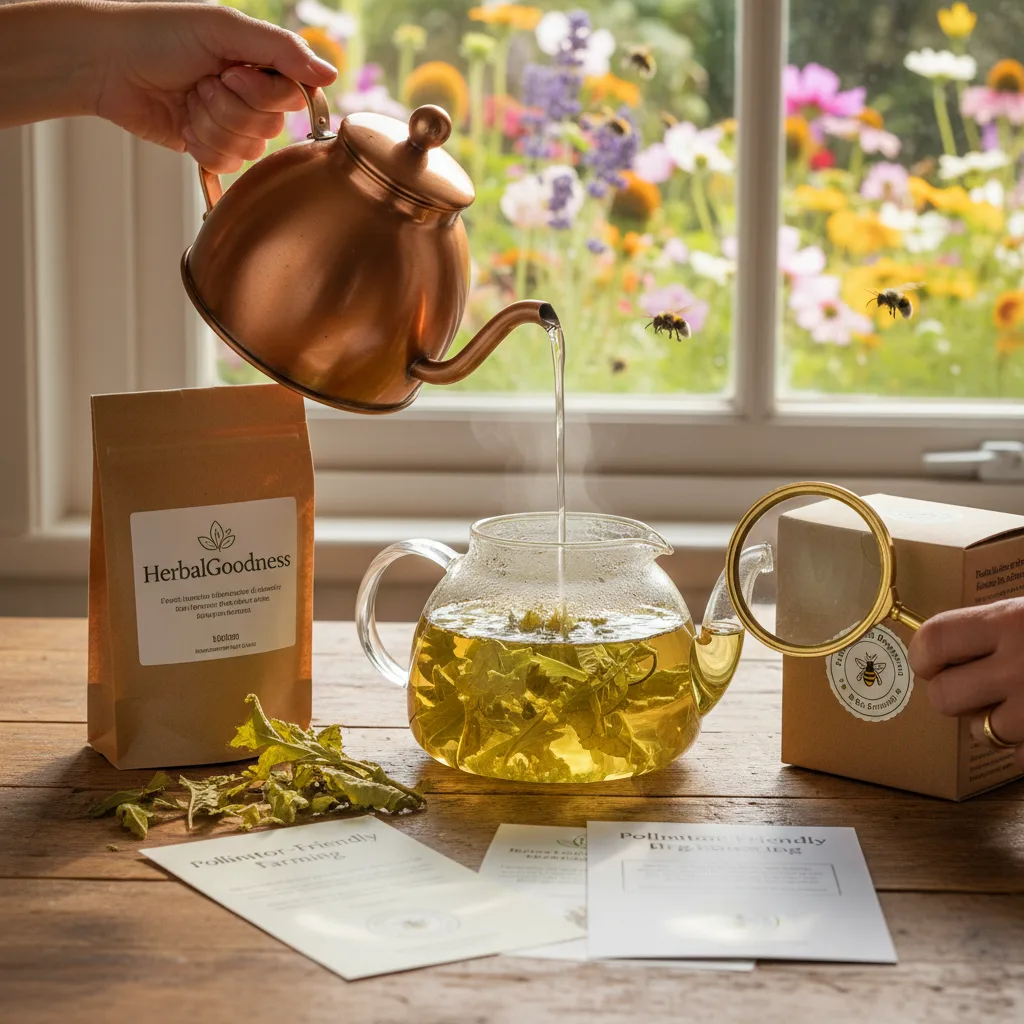
Evaluate Product Photos
- Are there images of blooming mullein fields, not just processed tea?
- Do you see wildflowers or flowering hedgerows in or near fields?
- Visible pollinators (like bees or butterflies) foraging in the farm photos can hint at an eco-supportive environment
Read Descriptions and Farm Stories Closely
- Does the farm or brand share stories about supporting pollinators or local biodiversity?
- Are buyers introduced to the farmers or their sustainability initiatives?
- Is there specific mention of habitat creation, or just generic statements about the environment?
Questions to Ask Herbal Tea Sellers About Pollinator Practices
When listings or labels aren’t clear, reaching out directly to the seller or producer makes a difference. Consider asking:
- How do you support pollinators on your mullein farms?
- Look for details about wildflower plantings, untreated field margins, or organic pest management.
- Are any certifications in place related to pollinator health?
- Bee Better Certified or similar programs may be mentioned.
- Do you leave some mullein flowers for local pollinators to feed on?
- Sustainable farms might intentionally reserve portions of crops for wildlife.
- What is your policy on pesticide usage?
- Even organic-approved pesticides should be used only when necessary and in pollinator-safe ways.
- Can you provide photos of your farm and discuss your biodiversity practices?
- Transparent, eco-conscious farms are usually happy to share visual evidence and specifics.
Key Considerations When Shopping for Organic Pollinator-Friendly Mullein Tea
To synthesize everything you might look for during your search:
- Check for trusted organic certifications to ensure baseline environmental standards. Items such as Flow Secure 15X Liquid Extract | Female Hormone & Menstrual Wellness may highlight independent certifications and eco-sourcing.
- Seek out brands or farms committed to biodiversity—those who go beyond the basics, describing wildflower integration or maintaining natural field borders. Sustainable sourcing stories offered by products like Organic Papaya Leaf Extract 16oz | 15X Liquid – Best Value Size can guide environmentally conscious shoppers.
- Evaluate packaging, website, and social media photos for visible evidence of pollinator habitats.
- Read brand and farm stories for passion and detail regarding pollinator stewardship. Considering plant-based supplements made by companies invested in ethical sourcing, such as Papaya Leaf Blood Support Capsules 10X | 60ct – Platelet Wellness, underscores your support for planet-friendly agriculture.
- Contact sellers directly if you want to clarify how your purchase helps pollinators.
The Importance of Transparent Sourcing and Traceability in Herbal Teas
Transparent sourcing reveals more than just the geographic origin of your mullein tea—it opens a window into the farm’s environmental ethos. Farms truly dedicated to pollinator support are usually proud to provide:
- The precise location or type of their farms (family-owned, community-based, regenerative, etc.)
- Descriptions or photos of their agricultural landscape
- Backstories about their relationship with local wildlife, especially pollinators Such traceability helps you make informed choices and enables you to align your purchases with your values.

How Herbal Goodness Aligns With Pollinator-Friendly Sourcing
Herbal Goodness often highlights the sourcing stories behind its herbal teas, including mullein. By working with certified organic farms that are mindful of pollinator and biodiversity impacts, brands like Herbal Goodness support shoppers seeking both quality and environmental stewardship. When choosing organic mullein tea, transparency about pollinator-friendly practices not only bolsters your own wellness journey—it also uplifts the landscapes that make herbal teas possible. For those seeking organic herbal blends with a sustainability focus, considering Lion's Mane Mushroom Liquid Extract | Organic – Brain Focus & Mood can be part of an overall commitment to eco-conscious shopping.
Frequently Asked Questions
Question 1: How can I tell if an herbal product or tea is pollinator-friendly?
Answer: Look for certifications like USDA Organic or Bee Better Certified, check for brand storytelling about biodiversity and pollinator habitats, and evaluate packaging or product photos for signs of pollinator-supportive farming. Products such as Flow Secure 15X Liquid Extract | Female Hormone & Menstrual Wellness may display independent certification or sourcing transparency.
Question 2: Why does biodiversity matter for the quality of mullein tea?
Answer: Increased biodiversity supports a healthier farm ecosystem, benefits pollinators, and can enhance the resilience and quality of herbal crops. Brands that prioritize biodiversity, like those offering Papaya Leaf Blood Support Capsules 10X | 60ct – Platelet Wellness, contribute to thriving herbal cultivation.
Question 3: What’s the connection between organic farming and pollinator health?
Answer: Organic farms avoid synthetic pesticides and support natural habitats, fostering safer environments for pollinators. This approach mirrors the sourcing behind products like Organic Papaya Leaf Extract 16oz | 15X Liquid – Best Value Size, enhancing both ecological and product integrity.

When shopping for organic mullein tea, a little research helps you make choices that support both your wellness and the future of pollinators. Mindful purchasing empowers you—and the ecosystems you care about.
About the Author
Herbal Goodness Editorial Team
The Herbal Goodness Editorial Team specializes in holistic health and superfoods, blending science and nature to educate and empower our community.
Related Blogs:
Mullein Leaf Liquid Extracts Online: Calculate the True Cost Per Use
Mullein Liquid Extract Label Decoder: Terms Explained for Smart Shoppers
Questions to Ask Before You Buy Mullein Leaf Liquid Extract Online
Smart Photo-Checks: How to Judge Mullein Tea Bag Quality Online Effort