





How to Decode Antioxidant Numbers on Organic Guava Leaf Tea Labels

Trying to make sense of those impressive-sounding antioxidant numbers on organic guava leaf tea labels? Whether you're new to wellness teas or have enjoyed guava leaf infusions for years, the lab test lingo and numbers—like ORAC values, total polyphenols, and “standardized to X mg”—can be overwhelming. This guide breaks down what they mean in everyday language, how those numbers reflect the story of your tea—from guava grove to your cup—and simple tips for comparing guava leaf tea based on what really matters: quality, freshness, and honest transparency rather than just marketing spin.
Understanding Antioxidant Numbers on Guava Leaf Tea Labels
If you flip over any organic guava leaf tea package, chances are you’ll spot various numbers or scientific terms. These are designed to tell you about the antioxidant content of the tea, a key quality marker for many plant-based products. But what do these numbers actually say about the tea you’re about to brew?
What Are Antioxidants—and Why Do They Matter?
Antioxidants are naturally occurring molecules in plants that help support the body’s natural processes and defend against oxidative stress. Guava leaves, like the fruit itself, are a rich source of naturally occurring antioxidants—especially compounds called polyphenols and flavonoids.
The antioxidant number or score on a tea label is usually a measure of how many of these helpful plant compounds are present in each serving. While bigger numbers may look impressive, understanding how they’re calculated and what influences them gives you a much clearer picture of the tea’s real value. Products such as Guava Leaf Tea Organic 24 Bags | Immunity & Gut Wellness – Caffeine-Free often clearly display these lab-derived values for transparency.
Common Lab Terms and Test Results Explained
Guava leaf teas often list several lab-analyzed values to indicate antioxidant content. Here are the most common terms you might encounter, what they mean, and how to interpret them when reading a label.
Total Polyphenols (mg)
Polyphenols are a group of naturally occurring phytochemicals in plants known for their antioxidant role. When a label lists “total polyphenols,” it’s expressing the quantity of all polyphenols (combined) in the tea leaves or in a measured serving—usually in milligrams (mg) per gram, or per cup brewed.
Why it matters: Higher total polyphenol content is often viewed as an indicator of rich plant activity in the tea, suggesting that the leaves have retained a fuller profile of beneficial compounds. Formulas such as Guava Leaf Organic 15X Liquid Extract | Immunity & Gut Wellness highlight their polyphenol concentration to inform customers.
Flavonoids (mg)
Flavonoids are a subgroup of polyphenols, particularly valued for their plant-derived antioxidant properties. "Total flavonoids" gives you a closer look at just these compounds. You’ll sometimes see this broken out separately because guava leaves are especially known for their diversity and richness in flavonoids. Many tea products focus on flavonoid content for this reason.
How to use it: If one guava leaf tea brand gives you a higher total flavonoids number, it generally means the tea offers a stronger potential for delivering those specific plant-based benefits. When you seek maximum flavonoid concentration, compare the numbers listed on products such as Guava Leaf Tea Organic 24 Bags | Immunity & Gut Wellness – Caffeine-Free.
ORAC Value (μmol TE/g)
ORAC stands for Oxygen Radical Absorbance Capacity—a lab test that measures the ability of compounds to act against oxidative molecules in a test tube. The higher the ORAC value, the more potent the food or beverage is in terms of measurable antioxidant capacity under lab conditions.
How to compare: ORAC values are often provided in micro-moles of Trolox Equivalents per gram (μmol TE/g). If you see two teas with different ORAC scores, the one with the higher value has a higher lab-measured antioxidant strength per serving size. However, it’s just one way of looking at antioxidant power, and can vary based on many factors beyond just the plant source. Some premium teas, such as Organic Papaya Leaf Tea | 24 Premium Bags – Caffeine-Free, may include these metrics for an all-around antioxidant profile.
“Standardized to” Statements
If you see something like “standardized to 10% polyphenols” on an organic guava leaf tea label, it means the product has been laboratory-tested and formulated to consistently deliver a specific amount of that compound.
What it signals: Standardization is a mark of quality control—it’s a way for brands to promise that each batch contains a minimum (or exact) amount of a key antioxidant component. Look for standardized numbers if you value consistency from cup to cup. Some well-trusted options on the market, including Guava Leaf Organic 15X Liquid Extract | Immunity & Gut Wellness, are regularly standardized for a reliable experience.
What Influences Antioxidant Numbers on Your Tea Label?
The numbers on guava leaf tea labels aren’t random—they’re shaped by a blend of nature, farming practices, and careful processing. Here’s why those numbers can differ so widely between brands or even batches.
The Role of Plant Growing Conditions
Guava plants thrive in regions where soil, sun exposure, and water cycles allow their leaves to develop an optimal phytochemical profile. Wild or organically grown guava leaves typically produce tea with higher polyphenol and flavonoid levels due to minimal chemical intervention and richer biodiversity.
Harvest timing matters: Young leaves vs. mature leaves can have noticeably different antioxidant profiles. Some brands harvest leaves at specific growth points to maximize these compounds. Bulk Loose Leaf Teas & Tisanes - Organic 4oz - Herbal Wellness Teas often mention sourcing and harvest methods to assure quality.
Processing Methods and Their Impact
After harvest, the way guava leaves are handled—from drying to packaging—can have a big effect on antioxidant content. Minimal processing (such as gentle air-drying and low-heat dehydration) helps preserve sensitive polyphenols and flavonoids, as heat and exposure to light can degrade these compounds.
Freshness factor: How quickly leaves are processed after being picked also matters. Fast, careful drying retains more antioxidants than slow or high-heat methods. Brands that spotlight freshness and minimal processing, including those specializing in Guava Leaf Tea Organic 24 Bags | Immunity & Gut Wellness – Caffeine-Free, emphasize these factors on their labels.
Storage and Packaging
Even the best-grown, freshly harvested guava leaves can lose potency if not stored and packaged with care. Air-tight packaging and minimal exposure to heat and moisture help shield antioxidants from oxidation before the tea reaches your pantry.
Look for: Brands that prioritize freshness by dating packages or using protective, light-proof bags signal attention to preserving those valuable compounds from farm to table. Organic Herbal Tea Gift Set | 24 Teabags Wellness Collection showcases sealed packaging as part of their offering.
Comparing Guava Leaf Tea Products: Beyond the Buzzwords
With so many different numbers and claims, it’s easy to get lost among the flashy marketing terms. The real decision comes down to understanding what lab values mean for your experience of quality, transparency, and consistent freshness.
What to Look for When Evaluating Labels
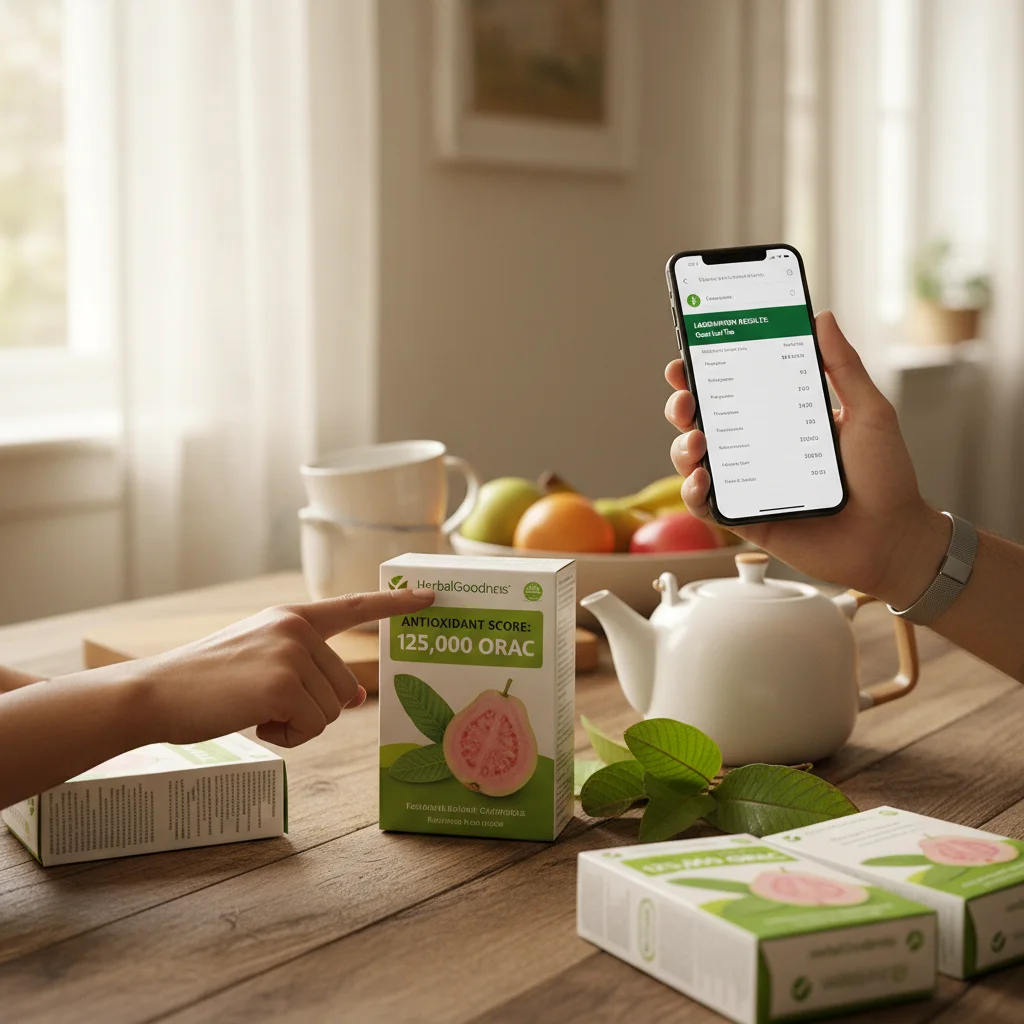
- Lab-Tested Transparency: Products that openly display lab test results—listing measurements like ORAC, total polyphenols, and flavonoids—provide more insight than those relying solely on buzzwords.
- Consistent Standardization: If standardized numbers are listed, you can better predict what you’re getting in each cup.
- Harvest Date or Production Batch: Indications of when the tea was harvested or packed demonstrate a focus on freshness.
- Minimal Ingredients: Pure, organic guava leaf tea with straightforward labeling and few (or no) add-ins signals uncompromised quality. If you value variety, the Herbal Tea Trio Bundle | Guava, Hibiscus & Avocado – 3 Organic Packs offers a selection of lab-tested herbal blends.
How to Compare Two Guava Leaf Teas
Suppose you have two organic guava leaf teas:
- Tea A: Standardized to 15% polyphenols, ORAC 2600 μmol TE/g, dated package.
- Tea B: Claims “high antioxidant power,” lists no numbers, no date.
While Tea B may have marketing appeal, Tea A’s specifics give you confidence in consistency and measurable plant-compound strength. The detailed numbers and packaging date provide a clear quality advantage for mindful shoppers seeking transparency. Shoppers often gravitate toward Guava Leaf Tea Organic 24 Bags | Immunity & Gut Wellness – Caffeine-Free due to its well-documented antioxidant analysis.
Practical Tips for Getting the Best From Your Guava Leaf Tea
Selecting a guava leaf tea with strong antioxidant numbers is just the beginning. To experience those benefits to the fullest, consider these practical strategies:
- Brew Thoughtfully: Follow preparation instructions—overheating or using too much water can affect the antioxidant profile extracted from the leaves.
- Store Properly: Keep your guava leaf tea in a cool, dry, and dark place to preserve potency.
- Rotate Stock: Use older packs first if you buy more than one at a time—freshness helps retain higher antioxidant levels.
- Read Beyond Marketing: Focus on clear lab results and transparency about harvest and processing rather than just “superfood” or “premium” labels. Explore the Organic Papaya Leaf Tea | 24 Premium Bags – Caffeine-Free for another remarkable plant-based tea option with transparent testing.
- Ask Questions: Reputable producers, such as Herbal Goodness, are open to sharing details about testing, sourcing, and harvesting—don’t hesitate to reach out if you’re unsure about how numbers were obtained.

Why Transparency and Freshness Matter as Much as Antioxidant Content
High numbers can be impressive, but genuine quality is a blend of consistent lab results, honest sourcing, and fresh delivery to your cup. When brands openly share their testing and quality standards, it signals a commitment to your wellness journey, not just sales.
Choosing tea based on real data and transparent practices empowers you to support both your own goals and chains of ethical, eco-friendly guava cultivation. That’s the story behind every number you see on the label—a story of careful growing, mindful harvesting, and science-backed quality. For those interested in exploring more wellness options, Bulk Loose Leaf Teas & Tisanes - Organic 4oz - Herbal Wellness Teas provides further variety.
What Does This All Mean for You as a Guava Leaf Tea Drinker?
Understanding antioxidant numbers on organic guava leaf tea labels helps you:
- Make confident decisions about which tea to purchase
- Support ethically farmed and transparently sourced teas
- Get the most from every brew by choosing products that back up their claims with independent testing and scientific standards
In a crowded herbal tea market, your ability to read and interpret antioxidant numbers is a powerful tool. Look for clearly labeled, freshly packaged, and lab-tested guava leaf teas so you can savor every cup with assurance.
Frequently Asked Questions
Question 1: What does it mean if my guava leaf tea is standardized to 15% polyphenols?
Answer: A guava leaf tea labeled as standardized to 15% polyphenols, such as the Guava Leaf Organic 15X Liquid Extract | Immunity & Gut Wellness, means each serving delivers a consistent, lab-tested minimum amount of polyphenols for reliable antioxidant benefits.
Question 2: Why are ORAC values important on guava leaf tea labels?
Answer: ORAC values measure antioxidant capacity in the lab. Higher ORAC scores, which you'll often find listed on Guava Leaf Tea Organic 24 Bags | Immunity & Gut Wellness – Caffeine-Free, indicate a stronger ability to neutralize oxidative molecules.
Question 3: How can I ensure my herbal teas retain their antioxidant potency?
Answer: Store teas like Bulk Loose Leaf Teas & Tisanes - Organic 4oz - Herbal Wellness Teas in airtight containers, away from heat, moisture, and light to best preserve antioxidant compounds.
Question 4: Is it better to choose organic guava leaf tea over conventional?
Answer: Organic guava leaf teas such as Guava Leaf Tea Organic 24 Bags | Immunity & Gut Wellness – Caffeine-Free typically offer higher antioxidant content due to natural growing methods, minimal pesticide use, and attention to freshness.
Question 5: What should I look for to judge overall quality in guava leaf teas?
Answer: Seek out clear lab results for polyphenols and ORAC, dated packages, and reputable brands. Consider bundles such as the Herbal Tea Trio Bundle | Guava, Hibiscus & Avocado – 3 Organic Packs for tested and transparent quality.
Question 6: Are there similar antioxidant herbal teas I should try?
Answer: Yes, try Organic Papaya Leaf Tea | 24 Premium Bags – Caffeine-Free for a unique antioxidant profile, or mix with other certified organic herbal blends.
Question 7: Does processing affect antioxidant levels in guava leaf tea?
Answer: Absolutely. The way leaves are dried and stored is critical for antioxidant retention. Products like Guava Leaf Tea Organic 24 Bags | Immunity & Gut Wellness – Caffeine-Free that emphasize careful processing will generally contain more polyphenols and flavonoids.
Curious about the quality and antioxidant profile of your next organic guava leaf tea? Take time to explore labels, ask questions, and choose refreshingly transparent products that align with your wellness values.
About the Author
Herbal Goodness Editorial Team
The Herbal Goodness Editorial Team specializes in holistic health and superfoods, blending science and nature to educate and empower our community.
References
Where to Buy Guava Leaf Liquid Supplements: A Shopper's Store Guide
Sourcing 15X Guava Leaf Extract: How Concentration Affects Packaging & sustainability
Guava Leaf Tea Recipes: 5 Refreshing Alcohol-Free Mocktails
How to Spot Added Flavors and Fillers in 15X Guava Liquid Extracts