



Guava Leaf Extract: Decoding Supplement, Food, and Cosmetic Labels

Understanding what’s on a guava leaf extract label can feel like deciphering a code. Is it a food? A dietary supplement? Or a cosmetic? As guava leaf becomes more popular in everything from teas to nutrition capsules and face creams, packaging terms and legal language take on real importance. Knowing what these terms actually mean not only gives you confidence as a buyer—it ensures you get a product that suits your intentions. This guide unpacks the differences you’ll see between 'supplement', 'food', and 'cosmetic' labels on guava leaf extracts, clearly explains what various certifications and claims signify, and clarifies the regulatory reasons why two similar-looking bottles may not be interchangeable.
Guava Leaf Extract Categories: Supplement, Food, and Cosmetic
How Regulations Frame Guava Leaf Extracts
When you pick up a bottle of guava leaf extract, labeling is shaped by U.S. regulatory frameworks. Federal law places herbal extracts into one of three primary categories — dietary supplements, foods (including beverages), and cosmetics. Each category limits what claims a manufacturer can legally make and what label information must be included. For shoppers, this means that how a guava leaf extract is described on the label directly relates to what you can expect from the product—and what you can (and should not) use it for.
Dietary Supplement: What Does It Mean?
A 'dietary supplement' guava leaf extract is marketed for use by mouth, such as in capsules or liquid drops meant for ingestion. In the United States, supplements are regulated under the Dietary Supplement Health and Education Act (DSHEA) of 1994. This defines supplements as products intended to add to the diet — not to replace a meal, or function as a medicine. Labels require a Supplement Facts panel, a full ingredients list, recommended dosage or serving size, and must include the cautionary disclaimer: “This statement has not been evaluated by the Food and Drug Administration. This product is not intended to diagnose, mitigate, treat, cure, or prevent any disease.”
Manufacturers must not make medical claims. Instead, labels may legally make structure/function claims (such as “supports healthy digestion” or “traditionally used for wellness”) so long as they are truthful and not misleading. Look for certifications like GMP (Good Manufacturing Practices) or third-party testing to help verify quality practices, such as those offered by companies like Herbal Goodness.
If you're considering a guava leaf supplement, choosing a product like the Guava Leaf Organic 15X Liquid Extract | Immunity & Gut Wellness can provide added confidence, since it displays full transparency with its ingredients and manufacturing standards.
Guava Leaf Extract as a Food Ingredient
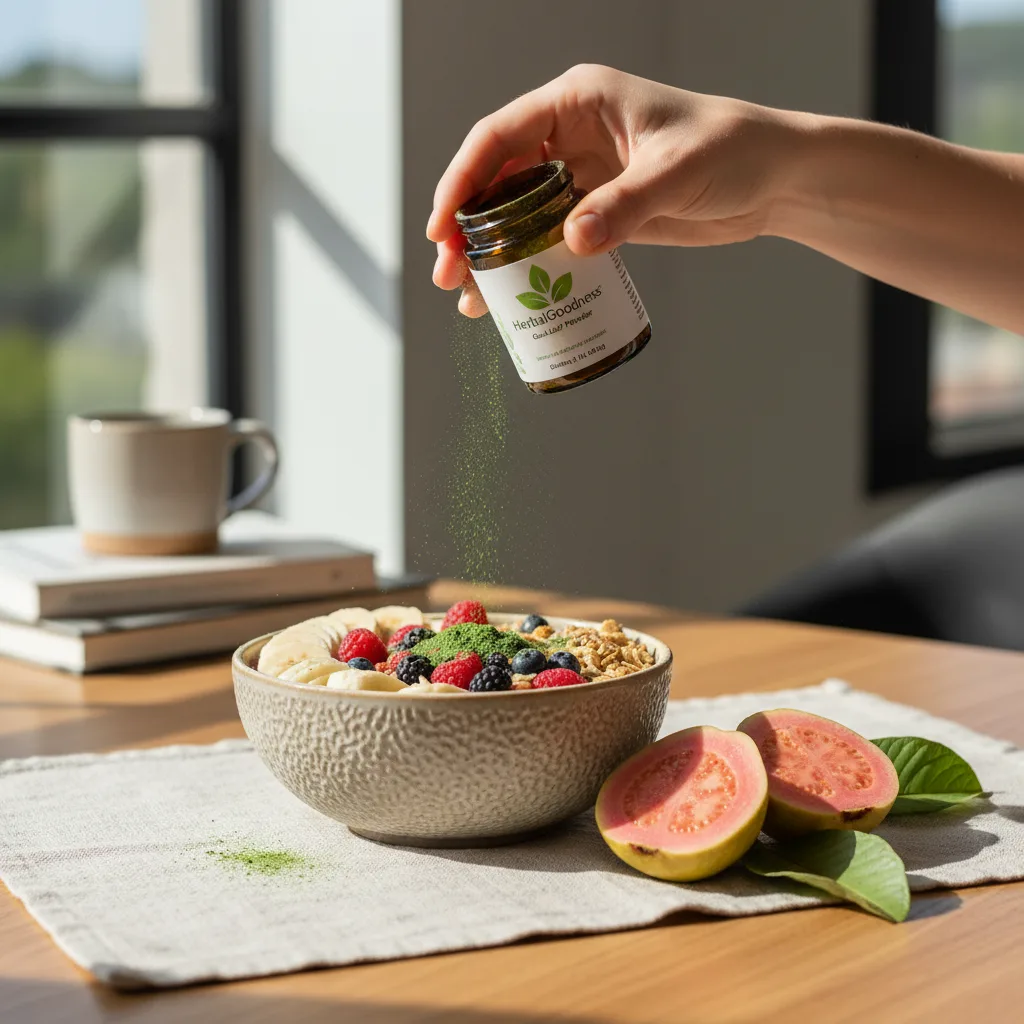
When labeled for use in food or beverage products, guava leaf extract must comply with food labeling standards. In this form, it could appear in tea blends, baked goods, or drink mixes. The label will display a Nutrition Facts panel and ingredient list, possibly alongside allergen warnings. Food-use guava leaf extracts must be from sources or processes recognized as safe (often, GRAS – Generally Recognized As Safe).
The claims allowed on food products are often more limited than for supplements. Any statement about the health benefits of guava leaf as a food ingredient generally must be supported by substantial scientific agreement among experts and cannot imply diagnosis, mitigation, or cure. You might see claims such as “naturally flavored with guava leaf extract” or “contains plant-derived antioxidants.” If you're interested in trying guava leaf in a food format, Guava Leaf Tea Organic 24 Bags | Immunity & Gut Wellness – Caffeine-Free is a standout example, also offering a simple, easy-to-understand ingredient panel.
When Guava Leaf Extract is a Cosmetic
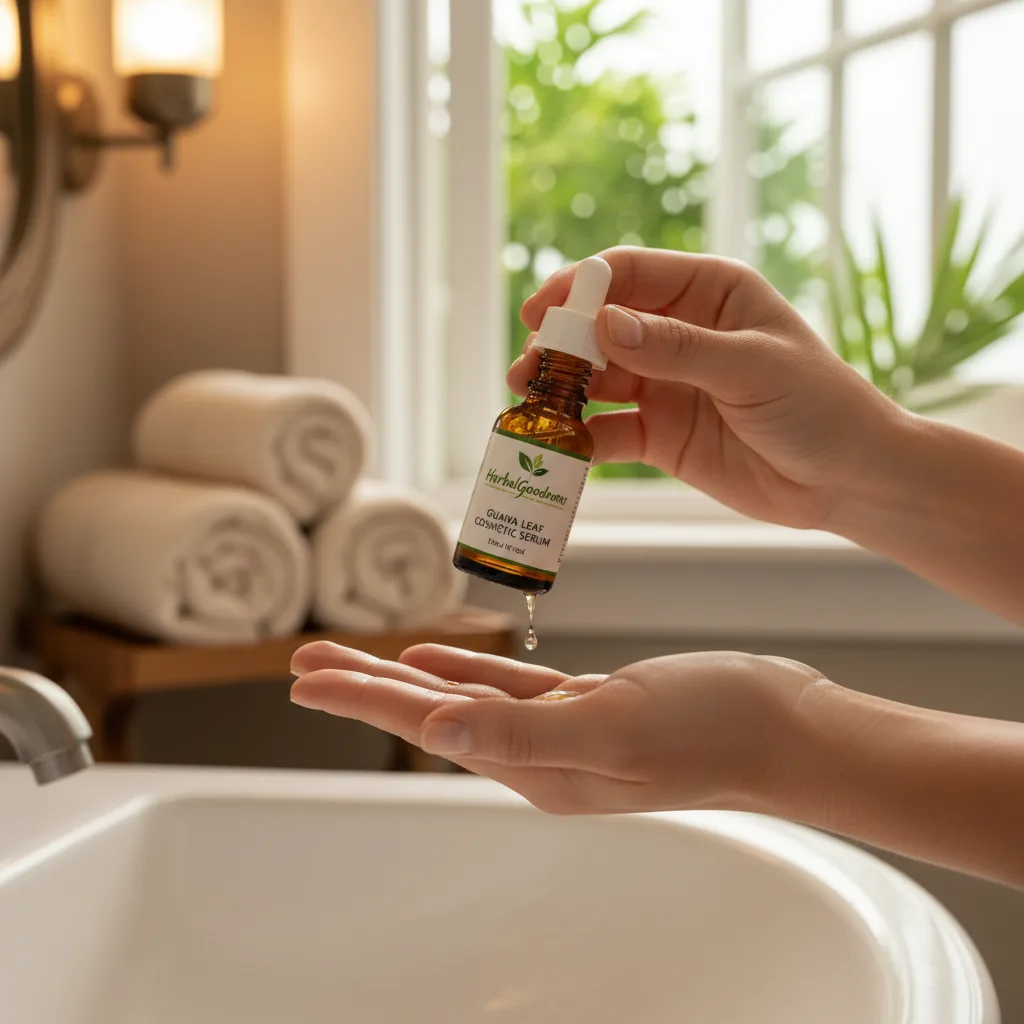
A guava leaf extract labeled as a cosmetic is meant to be applied externally—think skin serums, lotions, or facial sprays. U.S. regulations define cosmetics by their intended use: cleansing, beautifying, or altering appearance. Product labels do not include a Supplement or Nutrition Facts panel, but must inform you about ingredients and any relevant warnings (for example, “For external use only.”)
Cosmetic guava leaf extracts may make claims about supporting the appearance or texture of skin and hair, but, by law, cannot claim to affect the body’s structure or function. Any hint of medical effect on the label would reclassify the product as a drug, subjecting it to much stricter rules. Those looking for gentle, plant-based skincare can turn to products such as the Herbal Papaya Bath Soap | 2 Bars/3.5oz – Natural Skin Cleanse & Glow for a natural, ingredient-forward alternative.
What Common Guava Leaf Label Claims and Certifications Signify
Decoding Label Language
- 'Standardized Extract': This means the guava leaf extract contains a guaranteed amount of certain compounds from the plant, aiming to ensure consistency in quality. However, the exact compound standardized varies by brand. For added reassurance, you might seek out a standardized guava extract with verification of quality practices.
- 'Natural' or 'Plant-Based': These suggest the extract is derived from real guava leaves, but there is no strict legal standard for either term. Look for brands like Herbal Goodness that detail sourcing and processes. A great example is the Guava Leaf Tea Organic 24 Bags | Immunity & Gut Wellness – Caffeine-Free which focuses on plant-sourced, chemical-free production.
- 'Organic': USDA Organic certification confirms the guava leaf used was grown without synthetic pesticides or fertilizers, and processing followed federal organic standards.
- 'Vegan': Indicates the product contains no animal-derived ingredients—including in capsules or processing agents.
- 'Non-GMO': Asserts that neither the guava leaf nor other ingredients are genetically modified, often backed by third-party verification. For those preferring extra peace of mind, the Guava Leaf Organic 15X Liquid Extract | Immunity & Gut Wellness is non-GMO verified.
- 'GRAS' (Generally Recognized As Safe): GRAS status is typically associated with guava leaf as a food ingredient, meaning qualified experts have determined its safety within the intended usage.
- 'GMP Certified': Highlights that a manufacturer follows Good Manufacturing Practices, which are quality assurance requirements for food, supplement, and cosmetic production.
Legal Claims vs. Marketing Hype: What You Won’t See (Legally)
The U.S. Food and Drug Administration (FDA) bars any product—whether supplement, food, or cosmetic—from claiming it can treat, cure, or prevent any health conditions. Phrases like “clinically proven to…” or “eliminates all pain…” are not permitted unless the product has gone through rigorous FDA approval processes.
Instead, you may see softer, permissible claims:
- “Traditionally used to support wellness”
- “Helps maintain natural balance”
- “Nourishes with plant-derived ingredients” These are designed to communicate the product’s history or formulation emphasis, without crossing the line into medical territory. Products such as Guava Leaf Organic 15X Liquid Extract | Immunity & Gut Wellness typically use structure/function language, while tea options like Guava Leaf Tea Organic 24 Bags | Immunity & Gut Wellness – Caffeine-Free highlight antioxidant and gut wellness benefits.

Why Two Guava Leaf Products Look Alike — But Aren’t Buffer Substitutes
Intention and Usage: Read the Label, Not the Appearance
Two bottles can appear similar but be fundamentally different in how they’re legally intended. For example, a guava leaf supplement liquid and a guava leaf face mist might both be green, come in a dropper bottle, and smell plant-based — yet one is strictly for internal use as a dietary supplement and the other for external cosmetic application.
Switching these uses—even if the plant base seems the same—could be inappropriate or unsafe. Always check the designation (Supplement, Food, Cosmetic) as the format, dosage, and even extraction method are selected with that category’s requirements in mind. If you're exploring dietary supplements, only select products like Guava Leaf Organic 15X Liquid Extract | Immunity & Gut Wellness or capsule-based options such as Papaya Leaf Extract 10X Capsules 600mg | Platelet & Digestive Aid made specifically for oral use. For digestive-focused teas, the Guava Leaf Tea Organic 24 Bags | Immunity & Gut Wellness – Caffeine-Free addresses internal wellness, not external application.
Importance of Intended Use and Label Indications
Labels are legally required to inform you of:
- The category (Supplement, Food, or Cosmetic)
- The purpose (internal use, topical application, flavoring, etc.)
- Directions for use
- Cautions or warnings
- Ingredient transparency You know a product is intended for internal consumption if it carries a Supplement Facts or Nutrition Facts panel. For topical products, look for language like “external use only.” The Herbal Papaya Bath Soap | 2 Bars/3.5oz – Natural Skin Cleanse & Glow product demonstrates how compliant topical labeling appears, offering clarity on usage and ingredients.
Reading Guava Leaf Extract Labels with Confidence
Tips for Smart Label Evaluation
- Always identify the intended use first. Don’t rely on color or packaging alone.
- Look for regulatory cues: Supplement = Supplement Facts; Food = Nutrition Facts; Cosmetic = ingredient-only panel with use directions.
- Assess certifications and ingredient lists. Prefer products that provide transparency and, where available, documentation for certifications like Organic, GMP, or Non-GMO. Both the Guava Leaf Organic 15X Liquid Extract | Immunity & Gut Wellness and Guava Leaf Tea Organic 24 Bags | Immunity & Gut Wellness – Caffeine-Free are great models in label transparency.
- Understand that safety standards and manufacturing requirements differ by category. NEVER assume that a product designed for topical use is safe for ingestion, or vice versa.
How Seller Claims Are Shaped by Labels
Label categories define exactly what claims can be made:
- Supplements: Structure/function only, no disease references, as seen in Guava Leaf Organic 15X Liquid Extract | Immunity & Gut Wellness.
- Food ingredients: General wellness or flavor, not specific bodily effects, which is how Guava Leaf Tea Organic 24 Bags | Immunity & Gut Wellness – Caffeine-Free is advertised.
- Cosmetics: External beauty or sensory support, no claims about internal effects, as detailed with Herbal Papaya Bath Soap | 2 Bars/3.5oz – Natural Skin Cleanse & Glow.
If you’re comparing guava leaf extracts on the shelf or online, remember: the most important information is right on the label — if you know how to read it.
Frequently Asked Questions
Question 1: How do I know if a guava leaf extract is safe for internal use?
Answer: Check if the product includes a Supplement Facts or Nutrition Facts panel. Look for options such as the Guava Leaf Organic 15X Liquid Extract | Immunity & Gut Wellness which is specifically designed for internal consumption.
Question 2: What does it mean when a guava leaf product says 'for external use only'?
Answer: This indicates the product is a cosmetic and is not meant to be ingested. Example: Herbal Papaya Bath Soap | 2 Bars/3.5oz – Natural Skin Cleanse & Glow is suitable for skin but not for internal use.
Question 3: Are claims like 'immunity support' allowed on guava leaf products?
Answer: For dietary supplements like Guava Leaf Organic 15X Liquid Extract | Immunity & Gut Wellness, structure/function claims such as 'supports immunity' are allowed as long as they are not misleading and don’t reference specific diseases.
Question 4: Do guava leaf teas and supplements have different regulations?
Answer: Yes. Teas such as Guava Leaf Tea Organic 24 Bags | Immunity & Gut Wellness – Caffeine-Free are regulated as foods, while supplements like Guava Leaf Organic 15X Liquid Extract | Immunity & Gut Wellness follow supplement guidelines.
Question 5: What certifications should I look for on guava leaf extract labels?
Answer: Organic, Non-GMO, and GMP certifications are valuable indicators of quality. For example, Guava Leaf Organic 15X Liquid Extract | Immunity & Gut Wellness provides organic and non-GMO transparency.
Question 6: Can I use a dietary guava leaf supplement on my skin?
Answer: No, products formulated for internal use, such as Guava Leaf Organic 15X Liquid Extract | Immunity & Gut Wellness, should not be applied externally. Choose cosmetic products like Herbal Papaya Bath Soap | 2 Bars/3.5oz – Natural Skin Cleanse & Glow instead.
Question 7: Is there an easy way to compare guava leaf extract label types?
Answer: Look for panels: 'Supplement Facts' for supplements, 'Nutrition Facts' for foods, and ingredient-only with use instructions for cosmetics. Examples include Guava Leaf Organic 15X Liquid Extract | Immunity & Gut Wellness for supplements and Guava Leaf Tea Organic 24 Bags | Immunity & Gut Wellness – Caffeine-Free for teas.
Reading labels with an informed eye ensures you choose the right guava leaf extract for your needs—whether as a supplement, a flavorful food ingredient, or a topical beauty product. Evaluate certifications and categories thoroughly before making your next purchase.
About the Author
Herbal Goodness Editorial Team
The Herbal Goodness Editorial Team specializes in holistic health and superfoods, blending science and nature to educate and empower our community.
Related blogs:
Small-Batch or Bulk? How to Compare Hibiscus Tea Sellers Online for th
How to Verify Certificates of Analysis (COAs) When Ordering Soursop Le
Cold-Brew and Sun-Brew: Gentle Ways to Make Organic Papaya Leaf Tea
High-Potency Ashwagandha Tinctures: Decoding Global Label Terms & Extr
Order 100% Pure Moringa Extract Online: What Searchers Really Mean
Inside the Word “Pure”: What Labels Really Tell You About Guava Leaf L
Reading Between the Lines: A Consumer’s Guide to Marketing Language on
Fresh, Dried, or Powdered Mango Leaves: How to Buy and Use Online
What to Ask Before Buying Papaya Seed Capsules: 9 Must-Know Questions