




Buy Bulk Organic Mullein Tea: Guide for Cafés & Retail Buyers

Thinking of buying organic mullein tea in bulk for your café, retail space, or simply to enjoy at home? As mullein tea continues to earn a dedicated following for its smooth, earthy flavor and centuries-old tradition, bulk purchases have become a practical solution for those looking to serve many cups or to stock up efficiently. Yet, making the leap to bulk sourcing can raise questions about yield, cost, quality, and storage. This guide offers a plain-English breakdown of what to know before you buy bulk organic mullein tea—and how to keep it tasting fresh cup after cup.
Estimating Yield and Cost-per-Cup for Bulk Mullein Tea
Understanding how much tea you're really getting—and what each cup costs—is essential. Bulk mullein tea is typically sold by weight, with common increments ranging from 8 ounces to 5 pounds or more. To estimate yield, start with the standard brewing ratio:
- Standard serving: 1–2 teaspoons (about 1–2 grams) of dried mullein leaf or blend per 8-oz cup
- Yield calculation example: 1 pound (~454 grams) yields 225–450 cups, depending on strength
Cost-per-cup breaks down as follows:
- Divide total tea weight (in grams) by serving size
- Divide total purchase price by yield
For example, if a 1-pound bulk bag costs $55, and you use 2 grams per cup, the cost per cup is about $0.24. Bulk pricing is often more favorable than pre-portioned packs, especially for high-turnover environments like cafes or wellness shops.
Why this matters: Clear yield and cost info helps cafés set menu pricing, lets retailers compare margins, and gives home users confidence in the value of larger purchases. If you want to compare with other herbal options, consider how the cost per cup of Organic Papaya Leaf Tea may differ from mullein and how this influences your assortment planning.
Join our Retailer & Wholesaler Interest List to access bulk pricing updates, seasonal supply availability, and wholesale herbal tea sourcing opportunities.
Tea Packaging and Cut Size: What They Mean for Freshness
Bulk organic mullein tea comes in a range of packaging styles and leaf cut sizes. Both these factors influence the tea's aroma, flavor, and shelf life.
Packaging Basics
- Resealable pouches: Preserve freshness and are ideal for repeated opening.
- Heat-sealed bulk bags: Often used for larger orders, but require transfer to airtight containers once opened.
- Eco-friendly or compostable bags: Reduce waste, but should still shield from air and moisture.
- Labeling: Look for origin, harvest date, certification (organic/sustainably sourced), and best-by date.
Cut Size and Quality
- Whole or roughly cut leaves: Generally retain more volatile oils—contributing to richer aroma and a traditional cup. May require mesh strainers when brewing.
- Fine cut or sifted: Easier for single-serve or teabags, but can lose aroma faster and may settle or dust.
What to prioritize: For bulk purchasing, opt for supplier-packaged teas that minimize air exposure and list a recent harvest. Choose cut size based on your brewing method and presentation needs.
To further explore sustainable options, our Bulk Herbs collection offers a wide variety of roots and herbs that can be purchased for low-waste, refillable stations in retail or café settings.
Requesting Samples and Performing Basic Quality Checks
Before placing a significant bulk order, it’s wise to request a sample or trial size to assess both the tea’s quality and the supplier’s reliability. Here’s how to approach it:
What to Request from Suppliers
- Small sample (1–2 oz): Enough for several tastings
- Harvest and processing information: To confirm organic practices and freshness
- Batch documentation or certification: Evidence of food safety and sourcing standards
At-Home and On-Site Quality Checks
- Aroma: Fresh mullein leaf should have a clean, slightly sweet grassy scent.
- Color: Uniform green/yellow hues signal recent harvest; brown or faded leaves may indicate age.
- Texture: Leaves should be dry but pliable, not brittle (signals long shelf life).
- Taste test: Brew a cup. Fresh mullein tea is smooth and mild without bitterness.
Tip: For retail or café buyers, involve your team in a taste and aroma panel. Document feedback to help align future purchases with customer preferences. You can also try a Mullein Leaf Tea Organic 24 Bags | Respiratory & Lung Wellness Support sample to benchmark important freshness parameters or offer alternative wellness options at your point of sale.
Bulk Storage and Low-Waste Refill Options
Proper storage preserves the value of bulk organic mullein tea. Whether for a busy tea bar or a home herbalist’s pantry, the following strategies minimize waste and maintain peak flavor.
Best Practices for Bulk Tea Storage
- Airtight containers: Glass, stainless steel, or heavy-duty food-grade plastic work well.
- Keep cool and dark: Store away from direct sunlight, heat, and humidity.
- Label containers: Record purchase date, source, and batch number for rotation.
- Small daily-use canisters: Refill from bulk only as needed to reduce repeated exposure.
Low-Waste and Refill Solutions
- Reusable bulk jars or tins: Ideal for front-of-house presentation in cafés or shops
- Compostable refill bags: Requesting suppliers to deliver in compostable bags supports eco-friendly goals
- Portioning for home use: Decant larger bags into smaller, tightly sealed jars to avoid staleness as you work through your supply
Why storage matters: Mullein tea that’s well protected from air, light, and moisture keeps its aroma and taste profile for months—saving cost and reducing loss due to staleness. If you're passionate about minimal packaging waste, the organic herbal teas is a popular option for those seeking both quality and sustainability.
Evaluating and Choosing Bulk Mullein Tea Suppliers
Selecting the right supplier is as important as the tea itself. Whether you’re a café owner, retail buyer, or home enthusiast, these criteria help ensure your order lives up to expectations.
Essential Factors to Consider
- Transparency: Organic certification and harvest information
- Communication: Responsive support for questions on cut size, packaging, and sourcing
- Flexibility: Availability of sample sizes or smaller increments before bulk purchase
- Reputation: Consistent positive feedback from business or wellness groups
- Logistics: Clear shipping timelines, tracking, and return policies
For those who want consistent quality and transparency in sourcing, Mullein Leaf Organic 15X Liquid Extract | Respiratory & Lung Wellness offers clear labeling, batch details, and organic certification that align with best practices in bulk buying. If respiratory support and herbal purity are priorities, this is a reference point to use with mullein product suppliers.
Reflecting Your Business Values
For some retailers or cafés, prioritizing direct or small-farm sourcing strengthens the connection between product and philosophy. Others may seek the reliability and efficiency of larger, established bulk tea suppliers. Either route, knowing what to ask signals knowledge and dedication to quality.
Join our Retailer & Wholesaler Interest List for priority access to bulk herbal tea supply, pricing updates, and verified sourcing options for cafés and retail buyers.

Tips for Serving and Refilling Bulk Mullein Tea in Commercial and Home Settings
Once you have your bulk organic mullein tea, how you portion and serve it influences the tea experience.
For Cafés and Tea Bars
- Consistent measure: Standardize teaspoon/tablespoon scoops for reliable taste batch-to-batch.
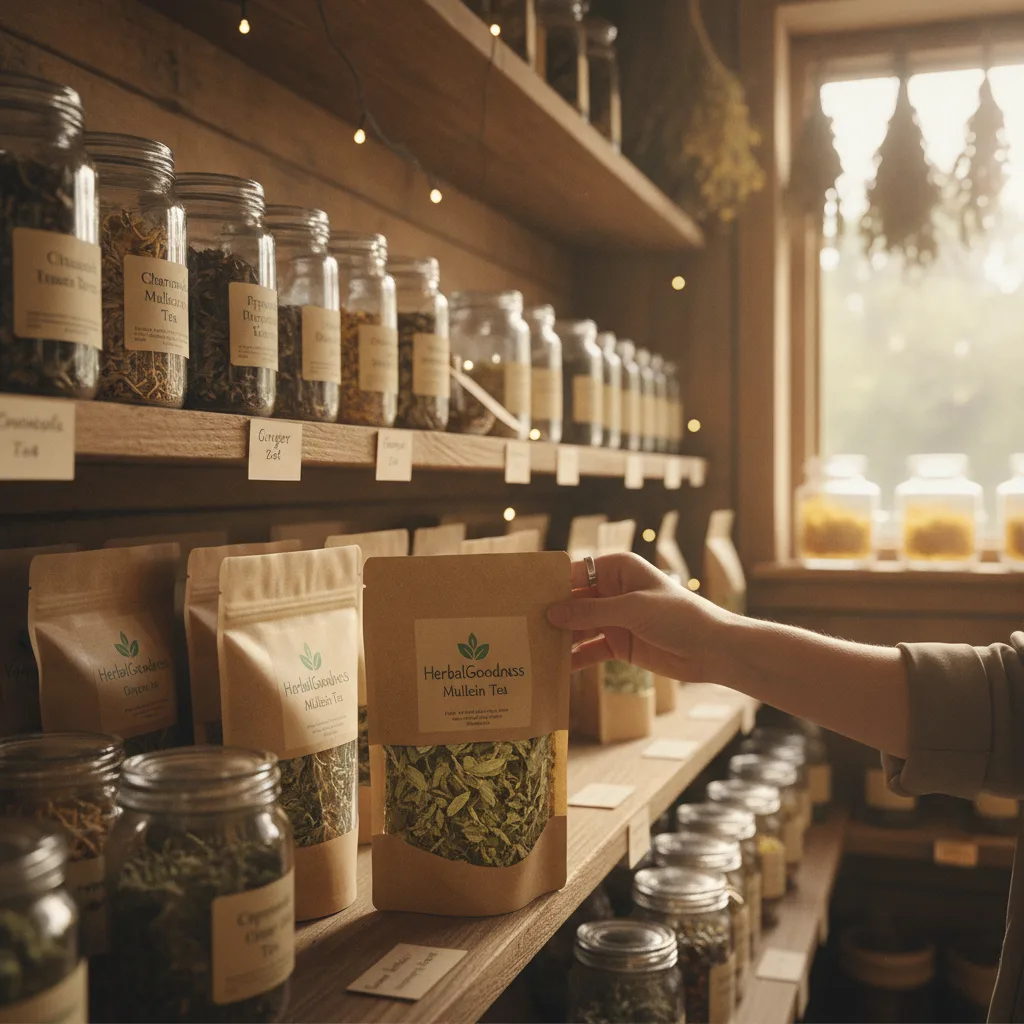
- Display: Glass jars or attractive tins allow customers to see and smell the tea—emphasizing freshness.
- Daily restocking: Minimize exposure of your large bulk bag by refilling small canisters as needed.
- Menu transparency: Sharing information about organic sourcing appeals to customers seeking quality.
For Retailers
- Refill station: Set up a low-waste refill area where customers bring their own jars or pouches.
- Portion options: Offer pre-weighed bags (2 oz, 4 oz, etc.) to help new buyers try before committing to larger sizes.
- Education: Simple signage about steeping ratios and freshness supports customer success with the product. Bringing variety, jars of Wellness Tea Blends – 4oz Organic Premium Herbal Infusions positioned at the refill station can help spark interest alongside your mullein selection.
For Home Stockers
- Personal system: Use multiple airtight jars to portion one large purchase for gradual use.
- Label details: Note purchase and open date to stay ahead of aging.
- Sharing economy: Consider splitting large bulk bags with friends or group members to maximize cost savings while keeping supply fresh.

Sustainability and Ethical Sourcing with Bulk Organic Mullein Tea
For many buyers, sustainability is as important as quality or price. Making mindful choices at the bulk-purchase level can multiply the impact:
- Certified organic: Ensures mullein is grown and processed free of prohibited pesticides
- Minimal packaging: Choose suppliers offering recyclable, compostable, or reduced-plastic options
- Supplier standards: Look for brands like Herbal Goodness that prioritize fair trade and eco-friendly sourcing
- Batch traceability: Seek transparency on harvest timeframes, regional sourcing, or direct-from-grower models
Taking these steps not only supports the planet but aligns your purchase with growing consumer preference for ethical goods and transparent supply chains. Bulk options such as Raw Sea Moss 8oz Bag | St. Lucia Wildcrafted – Nature's Multivitamin can also be sourced with attention to environmental impact, rounding out a conscious buying strategy.
Conclusion: Making Your Bulk Mullein Tea Purchase Count
Buying organic mullein tea in bulk is a practical option for cafés, retailers, and committed home users alike. By understanding yield and cost per cup, knowing how packaging and cut size affect freshness, performing basic checks before you purchase, and storing bulk tea with care, you set yourself up for a consistently delightful mullein tea experience. Each thoughtful step in the process ensures you—and your customers or family—enjoy vibrant, aromatic cups every time.
FAQs:
- How do I determine how much organic mullein tea to buy in bulk?
Estimate your weekly or monthly tea usage and multiply by the number of cups per pound (usually 225–450 cups per pound, depending on serving size). For cafés, align order volume with anticipated sales to ensure regular restock cycles and peak freshness.
- What is the typical shelf life of organic mullein tea bought in bulk?
When stored in airtight, light-proof containers away from heat and moisture, bulk organic mullein tea generally maintains optimal aroma and quality for 12 to 18 months. Always check packaging for specific best-by dates.
- What packaging is best for keeping bulk mullein tea fresh?
Resealable, airtight bags or tins are ideal. For long-term storage, transfer tea from supplier packaging to containers that block air and light, such as glass jars or double-sealed pouches.
- How do I assess the quality of mullein tea samples before a bulk purchase?
Assess aroma, color, and texture—look for a clean, sweet-grassy scent, uniform green/yellow leaves, and pliability. Brew a test cup to check for a smooth, mild flavor without bitterness.
- What are some low-waste storage or refill options for bulk tea?
Use reusable jars or tins, request compostable supplier bags, and refill small daily-use canisters from a main stockpile. Encourage customers to bring their own containers for retail refill stations.
- Does organic certification really matter for bulk mullein tea?
Organic certification signals that the tea was grown and processed without conventional pesticides, aligning with values of sustainability and natural integrity. It’s a key consideration for many buyers and adds trust and transparency.
Author Name:
Herbal Goodness Editorial Team
Author Bio:
The Herbal Goodness Editorial Team specializes in holistic health and superfoods, blending science and nature to educate and empower our community.
References:
Introducing Graviola to Young Taste Buds: Fun, Family-Friendly Flavor Exploration
Graviola in the Classroom and at Home: Creative Activities to Teach Kids About Tropical Plants
Why Social Impact Matters in Plant-Based Wellness