





Before Buying Papaya Seed Powder: Safety Checks That Matter

Papaya seed powder has captured the interest of wellness seekers and culinary enthusiasts alike. As more people look to buy and use this unique product for its tradition-rich qualities and robust flavor, a new set of questions emerges: How do you know if what you’re purchasing is truly pure? What does 'pure' mean when it comes to food safety, allergens, and home use? If you’re considering papaya seed powder, knowing how to handle, store, and select it with care is essential for both enjoyment and kitchen safety. This guide walks you through both the buying process and smart food handling at home—so you can shop, store, and use papaya seed powder with confidence.
What Does 'Pure' Really Mean for Papaya Seed Powder?
When shopping for papaya seed powder, 'pure' isn’t just about having 100% papaya seeds on the ingredient list. It also involves careful handling and production processes that guard against unwanted substances and cross-contact with allergens. Knowing what 'pure' means, from sourcing to packaging, can help buyers find the highest quality options and avoid unpleasant surprises.
Sourcing and Processing: The Foundation of Purity
- Single Ingredient: Verify that the only ingredient listed is papaya seed powder—no fillers, additives, or preservatives.
- Dedicated Facilities: Look for brands that process seeds in allergen-conscious or dedicated facilities, especially if you or your customers have sensitivities.
- Organic and Non-GMO Packaging: While certifications are not guarantees, they can indicate greater attention to sourcing and traceability. Choosing Organic Papaya Seed Powder 4oz | Gut Cleanse & Digestive Support can provide assurance on both purity and attention to ingredient integrity.
Understanding Label Information on Listings
Reading product details before you order papaya seed powder online or in-store can make a world of difference:
- Ingredients: Ensure nothing but papaya seed powder is listed.
- Allergen Statements: Review for statements like 'Packaged in a facility that also processes tree nuts, soy, wheat…'—a vital detail for those with allergies.
- Production Methods: Listings may reference 'allergen control' or 'cross-contact prevention'; these are positive indicators of attention to safety.
Essential Testing: Protecting Against Unwanted Substances
Choosing the best quality papaya seed powder means knowing what kinds of testing reputable sellers perform. Food products may be exposed to heavy metals, unwanted microbiomes, or inadvertent allergens as they move from field to package. Here’s what to request or look for:
Common Tests for Papaya Seed Powder
- Heavy Metal Testing: Ensures levels of substances like lead or arsenic do not exceed sustainable standards. Ask for Certificates of Analysis (COAs) from sellers. A trusted choice for those who want tested ingredients is the Body Detox Papaya Seed | Organic 15X Liquid Extract for Gut, which supports gut wellness.
- Microbiology Screening: Verifies absence of common foodborne contaminants such as mold and yeast.
- Allergen Screening: Especially essential for those with food allergies, ensuring the product hasn’t come into contact with common allergens.
What Should Sellers Provide?
Reputable suppliers, including companies like Herbal Goodness, often share detailed quality documentation upon request.
- COA (Certificate of Analysis): Confirms that batches have been laboratory tested for purity, heavy metals, and microbiology. If you need additional digestive support, consider Papaya Seed Powder Capsules 60ct | 600mg – Gut & Colon Cleanse Support, which also emphasizes rigorous sourcing and testing.
- Allergen Control Statement: Indicates whether the manufacturer has procedures in place for minimizing cross-contact.
How to Ask Sellers the Right Questions Before Buying
Whether you shop online or buy in-store, transparency matters. Asking direct and thoughtful questions supports a safer purchase experience:
- What tests are performed? Ask if the product is routinely checked for heavy metals, microbiomes, and allergens.
- Can you provide lab reports? Sellers who value quality are usually able to share COAs or other certification documents.
- Is your papaya seed powder processed in an allergen-safe facility? Especially useful for sensitive individuals and small food businesses.
Empowering yourself with these questions is part of being a responsible and well-informed customer.
Safe Storage: Avoiding Cross-Contact at Home
Even pure papaya seed powder can become problematic if not stored and handled with care. Cross-contact in home or small-scale commercial kitchens occurs when allergens from one food are accidentally transferred to another through shared surfaces, utensils, or containers. Here’s how to minimize risks:

Kitchen Storage Fundamentals
- Use Dedicated Containers: Transfer papaya seed powder to airtight containers labeled with the product name and 'contains papaya'.
- Keep Separate from Allergens: Store it away from products containing common allergens like peanuts, soy, or gluten-containing grains.
- Control Humidity and Light: Store in a cool, dry, dark spot to preserve quality and minimize clumping or spoilage.
Labeling Practices for Safety
Clear, visible labeling is a simple yet essential step in preventing mix-ups:
- Label Date of Purchase: Track freshness by dating containers as soon as you buy or open a package.
- Include Allergen Advice: If sharing a kitchen with sensitive individuals, note 'processed in a facility with XYZ allergens' when relevant.
Surface and Utensil Management
- Dedicated Utensils: Use a separate spoon or scoop for papaya seed powder, and avoid double-dipping with tools used for other products.
- Clean Thoroughly: Wash hands, surfaces, and utensils after each use to prevent unwanted transfers.
Transparent Labeling: Decoding Allergen and Testing Information
Quality brands take pride in clear, accurate labeling—and so should users at home. When you're buying papaya seed powder, pay attention to these labeling elements:
- Origin and Batch Number: Provides traceability in the event of recalls or questions.
- Allergen Warnings: Even if you are not affected, this is critical when purchasing for larger households or small commercial operations.
- Testing Seals: Some brands include symbols or seals for third-party tested products—indicators of extra diligence. For holistic wellness, many customers also look at Organic Papaya Leaf Extract 16oz | 15X Liquid – Best Value Size as a complement to their kitchen staples.
Small-Scale Commercial Use: Extra Steps for Food Businesses
Food entrepreneurs, such as juice bars or bakeries, must go beyond home practices to ensure product safety for all customers:
- Dedicated Prep Areas: If possible, set up a prep zone only for papaya seed powder and similar products.
- Staff Training: All staff should understand food safety guidelines, allergen handling, and proper storage.
- Allergen Information for Customers: Clearly communicate in menus or product listings whenever papaya seed powder is used or present.
- Documentation: Keep COAs, allergen statements, and supplier information on file for reference and safety audits. Also, supplement business wellness offerings with options like Green Papaya Fruit Extract - 4X 60/600mg Capsule - Digestion Aid for comprehensive support.
Making the Best Choice When You Shop Papaya Seed Powder
Whether you order papaya seed powder online or shop in person, your decision-making process protects everyone who might come into contact with your kitchen creations. Here are a few top tips for buyers:
- Evaluate Seller Transparency: Sellers who provide testing and allergen information up front are typically committed to quality.
- Look for Organic and Non-GMO Certifications: These may offer peace of mind regarding responsible sourcing and traceability. Organic Papaya Seed Extract 15X Liquid | Gut & Colon Cleanse Support stands out as a popular option.
- Check for Packaging Integrity: Packages should be sealed, undamaged, and clearly labeled with origin, batch number, and best by date.

Kitchen Safety: An Everyday Practice for Papaya Seed Powder
Safe use is an everyday commitment, not just a one-time process. By implementing standard kitchen safety practices, you protect your household or customers, avoid allergen cross-contact, and support a respectful, joy-filled cooking environment.
- Review Safety Guidelines Regularly: Food safety evolves, and staying up to date is key.
- Teach Others: Share knowledge with household members or staff.
- Keep Records: Track product sources, lot numbers, and storage dates in case questions arise later. Keeping a range of wellness products such as Papaya Leaf Blood Support | Organic 15X Liquid Extract is helpful for those seeking additional herbal support.
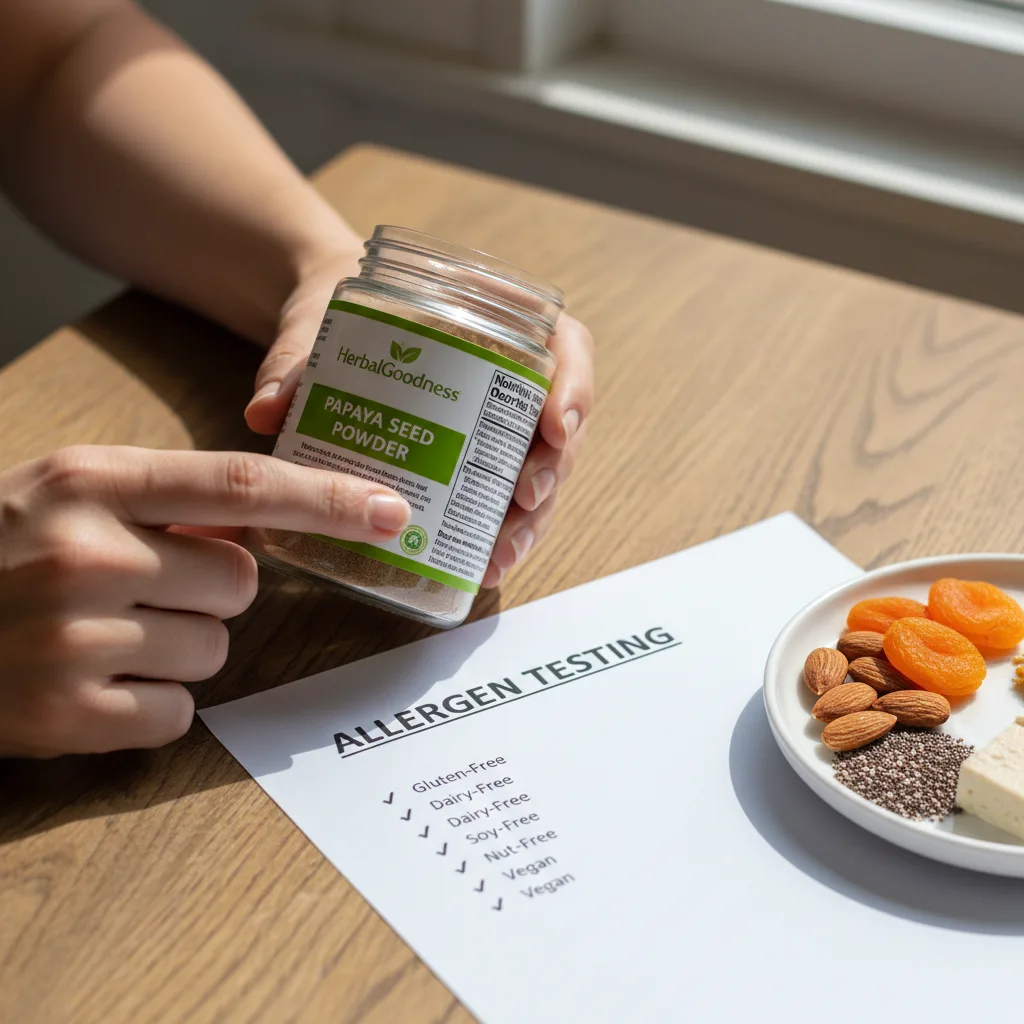
By setting intentional standards for buying, storing, and using papaya seed powder, every cook and food entrepreneur can foster a safe, inclusive kitchen environment. As you explore premium and organic offerings from trustworthy sources like Herbal Goodness, embracing these safety and buying practices ensures peace of mind and a more rewarding culinary experience.
FAQs:
- How can I identify pure papaya seed powder when shopping online?
Look for products that list only papaya seed powder as the ingredient and request information about allergen declarations, testing results, and Certificates of Analysis to confirm purity.
- Why is allergen cross-contact a concern with papaya seed powder?
Cross-contact can occur if papaya seed powder is packaged or processed near common allergens. If you or others have sensitivities, it's important to buy from sellers who prioritize allergen control and clearly label their products.
- What tests should I ask sellers about before buying papaya seed powder?
Ask for testing documentation covering heavy metals, microbiology, and allergen screening. Reputable suppliers will provide Certificates of Analysis for their products.
- How do I store papaya seed powder to prevent cross-contact at home?
Store papaya seed powder in a dedicated, labeled container away from common allergens. Use separate utensils and clean surfaces thoroughly after handling.
- What labeling should I look for on papaya seed powder products?
Check for clear ingredient lists, allergen statements, batch numbers, and, when available, details of testing or third-party certifications.
- Are there extra steps for small food businesses using papaya seed powder?
Yes. Use dedicated prep areas, train staff in allergen handling, document supplier testing, and clearly communicate allergen presence to customers on menus or listings.
Author Name:
Herbal Goodness Editorial Team
Author Bio:
The Herbal Goodness Editorial Team specializes in holistic health and superfoods, blending science and nature to educate and empower our community.
References:
Introducing Graviola to Young Taste Buds: Fun, Family-Friendly Flavor Exploration
Graviola in the Classroom and at Home: Creative Activities to Teach Kids About Tropical Plants