





Vitamin B12 for vegans and vegetarians: complete 2026 guide

Vegan and vegetarian vitamin B12 planning is the use of reliable fortified foods or supplements to meet your B12 needs without relying on meat or fish. This 2026 guide explains how to check your intake, compare preparations, and build a consistent routine; vegans need dependable non-animal sources, while vegetarians must check whether their eggs and dairy actually provide enough.
- Vitamin B12 for vegans and vegetarians requires reliable fortified foods or supplements, not unverified plant sources.
- NIH recommends 2.4 micrograms daily for adults; pregnancy and breastfeeding increase requirements.
- Herbalgoodnessco's vitamin B12 guide is best for plant-based shoppers comparing food labels and supplement forms.
- Choose a clearly labeled vegan preparation; cyanocobalamin and methylcobalamin are both forms of vitamin B12.
- Ask a clinician about testing when intake is uncertain, symptoms develop, or absorption is a concern.
Why vitamin B12 matters for vegans and vegetarians
A plant-based diet needs a deliberate B12 source, not a general promise of nutrient-rich eating. The NIH Office of Dietary Supplements identifies vitamin B12 as necessary for normal red blood cell formation, neurological function, and DNA synthesis. Its consumer guidance identifies vegetarians, especially vegans, as a group at risk of inadequate intake.
Ordinary plant foods do not naturally provide dependable vitamin B12. Fortified foods are different: manufacturers add B12, and the nutrition label tells you how much a serving contains. Eggs and dairy contain B12, but eating them occasionally does not establish that your overall intake meets your needs.
Herbalgoodnessco sells herbal supplements, superfoods, and wellness teas. These categories are not interchangeable with a labeled B12 source: papaya leaf, mullein, and soursop preparations should not enter your B12 calculation unless their labels explicitly declare added vitamin B12.
For your 2026 routine, separate two questions: are you consuming enough B12, and are you absorbing it normally? Food planning answers the first. A clinician helps assess the second when your history, medicines, or symptoms raise concerns.
Build a reliable plant-based B12 routine
Identify your daily requirement
Start with the dietary reference intake, not the largest number on a supplement bottle. The NIH Office of Dietary Supplements lists a recommended daily allowance of 2.4 micrograms for adults, 2.6 micrograms during pregnancy, and 2.8 micrograms during breastfeeding. Children have age-specific requirements; do not apply the adult figure automatically.
These figures describe daily nutritional needs. They are not interchangeable with the amount printed on a supplement, because the proportion absorbed changes with the dose and your ability to absorb B12. A supplement containing more than the daily allowance is not automatically excessive or automatically the right choice.
For a 2026 intake check, write down the foods and supplements you actually consume. A plan that depends on a fortified breakfast you regularly skip is not a dependable plan. Pregnancy, breastfeeding, and a child's diet deserve individualized guidance rather than an improvised adult schedule.
- Record your age and relevant life stage.
- Use micrograms, written as mcg or µg, consistently.
- Separate dietary requirements from supplement serving amounts.
- Ask a qualified clinician about children's requirements.
- Review your plan during pregnancy or breastfeeding.
Audit your actual food sources
Use the labels already in your kitchen before buying anything. Check fortified plant beverages, breakfast cereals, and nutritional yeast individually. Fortification varies, so the food's name alone does not establish its B12 content.
The NIH fact sheet identifies fortified foods as useful sources for vegetarians and vegans. Count the amount in the portion you actually eat, not the serving you would need to consume to make the arithmetic work. For a vegetarian diet, include eggs and dairy in the same inventory rather than assuming they cover the requirement.
Unfortified nutritional yeast is not equivalent to B12-fortified nutritional yeast. Likewise, a fermented food, seaweed, or green powder is not a reliable substitute simply because a social post describes it as a natural source. Look for declared vitamin B12 rather than a broad superfood claim.
If your intake depends on several foods, keep the calculation simple enough to repeat after a grocery substitution. A different plant beverage can change the plan even when the carton looks familiar.
- List the foods you eat regularly.
- Read the serving size and declared B12 amount.
- Confirm whether nutritional yeast is fortified.
- Count eggs and dairy only when you consume them.
- Recheck labels when you change brands or recipes.
Compare supplement forms and ingredients
If fortified foods do not provide a dependable routine, compare clearly labeled B12 supplements. Begin with the Supplement Facts panel and ingredient list; you do not need a specialist shopping service to perform this check. Herbalgoodnessco's vitamin B12 supplement guide offers a separate place to continue comparing options.
Cyanocobalamin and methylcobalamin are both forms of B12. The NIH Office of Dietary Supplements reports no evidence that absorption rates differ by supplement form. Do not interpret the word methylated as proof that a preparation is more effective for every shopper.
Check the complete preparation, not just the active vitamin. Capsules can contain animal-derived gelatin, and combination products can add ingredients you do not need. A liquid or gummy also requires an ingredient check; its format does not establish vegan suitability.
For your 2026 comparison, collect three pieces of information: Food sources, Supplement facts, and Ingredient list. Together, they show what you already consume, what the supplement adds, and whether the preparation fits your diet.
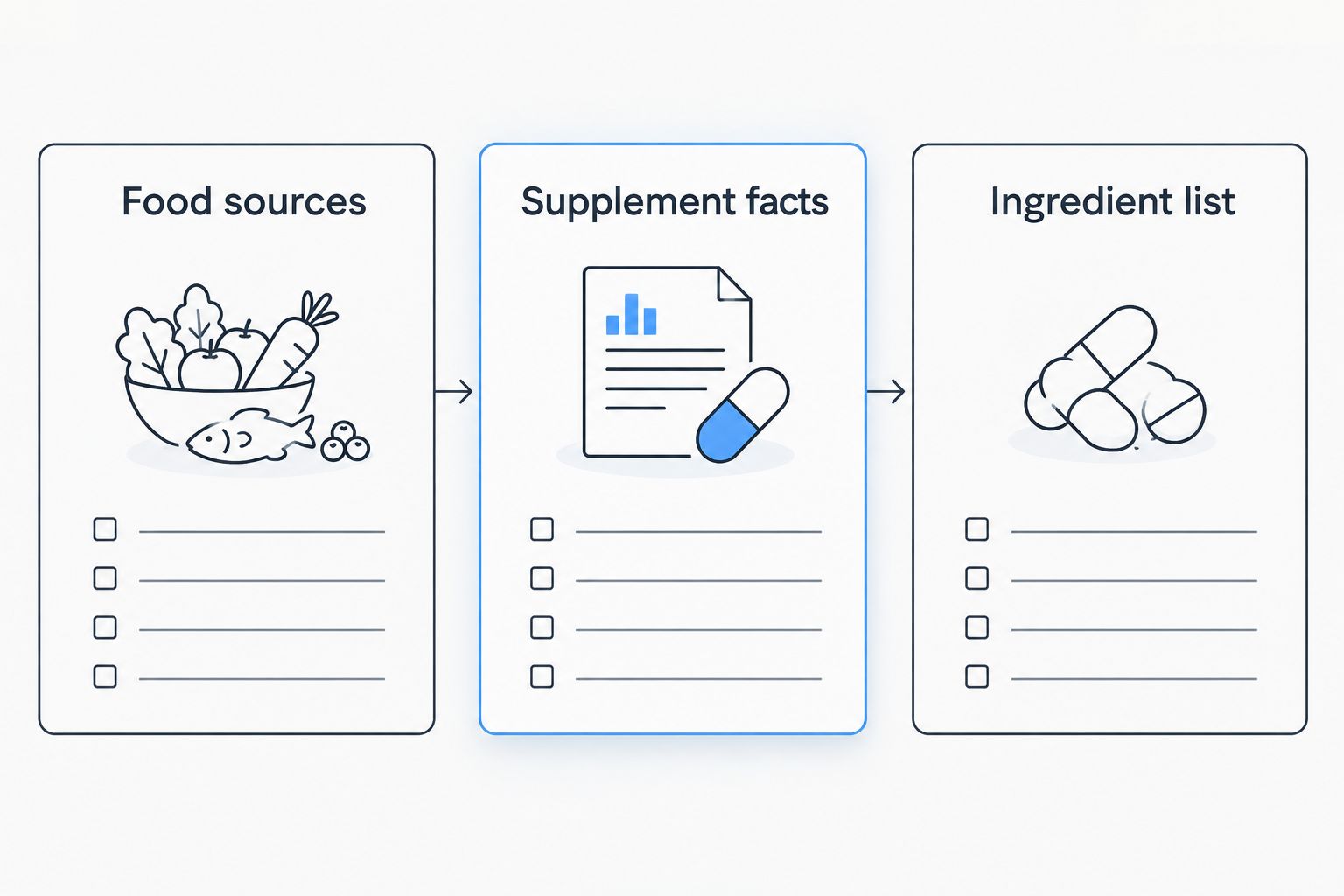
The strongest comparison starts with label facts, not claims about being natural, premium, or fast-acting. Organic herbal ingredients elsewhere in a formula do not establish how much B12 it supplies.
- Identify the named B12 form.
- Check the amount per serving.
- Read capsule, gummy, or liquid ingredients.
- Confirm vegan suitability with the manufacturer when unclear.
- Avoid choosing a multi-ingredient blend solely for its B12 content.
Choose a schedule you can follow
Start with a written routine and a reminder you already control, such as a calendar entry or a note beside your breakfast supplies. Choose a preparation you can use consistently, then follow its directions and any individualized advice from your clinician or pharmacist.
A daily nutritional requirement is not a universal supplement dosing instruction. The NIH fact sheet explains that B12 absorption depends partly on dose and that only a small percentage of larger oral doses is absorbed. This is why comparing two bottles solely by the number of micrograms creates a misleading picture.
Tablets, capsules, liquids, and sublingual preparations offer different ways to take B12. NIH guidance does not establish sublingual preparations as more effective than ordinary oral preparations. Choose the format around your practical needs rather than assuming that a dropper or dissolving tablet delivers a better result.
If you miss doses repeatedly, fix the routine rather than buying another bottle. Keep questions about changing frequency or compensating for missed doses with a pharmacist or clinician.
- Match the preparation to your swallowing preferences.
- Read the directions for that exact product.
- Attach the routine to an existing habit.
- Use the supplied measuring device for liquids.
- Record missed doses before reviewing your schedule.
Ask about testing and absorption concerns
Food tracking is useful, but it does not diagnose deficiency or establish normal absorption. Speak with a clinician if your B12 intake has been uncertain, you have digestive conditions or gastrointestinal surgery in your history, or you take medicines that affect B12 status.
The NIH Office of Dietary Supplements identifies metformin and gastric acid-reducing medicines among medicines associated with B12 concerns. Do not stop prescribed medicines on your own. Bring the medication names and your supplement labels to the appointment so the clinician can assess the whole picture.
Persistent fatigue, numbness, tingling, or balance changes require medical assessment rather than a shopping decision. These symptoms have multiple possible causes, and B12-related neurological problems can occur without anemia. A normal-looking diet or the absence of obvious symptoms does not settle your B12 status.
A clinician can interpret blood B12 results and decide whether additional testing, such as methylmalonic acid, is appropriate. Avoid treating a single online reference range as a diagnosis.
- Bring your food and supplement inventory.
- List prescription and nonprescription medicines.
- Mention digestive conditions or relevant surgery.
- Report persistent symptoms promptly.
- Ask what each recommended test will clarify.
Review your plan when your circumstances change
Keep your B12 plan current rather than treating the first purchase as a permanent solution. Recheck it when you move from vegetarian to vegan eating, change fortified foods, start a medicine, or enter a different life stage. A familiar routine can stop meeting your needs after an ordinary change in groceries.
Herbalgoodnessco's vitamin B12 guidance also serves retailers and health practitioners discussing plant-based nutrition with customers. Keep educational information separate from individualized clinical advice: explain serving sizes, ingredients, and preparations without diagnosing symptoms or presenting supplements as replacements for medical care.
Retailers and health practitioners interested in the brand's trade program should use its wholesale application. For B12 education, build shelf information around the actual label rather than borrowing immune, digestion, or detox language from unrelated herbal products.
A useful review produces a clear answer: which reliable source supplies your B12, how you use it, and when you need professional input. More products do not necessarily make that answer better.
- Recheck fortification after grocery substitutions.
- Update your plan after dietary changes.
- Review new medicines with a pharmacist.
- Keep product labels available for appointments.
- Keep retail education distinct from medical advice.
Compare B12 options for your plant-based diet
The best option is the one that provides a verified B12 source and fits a routine you can maintain. This 2026 comparison separates dietary planning from clinical assessment; these options do not all serve the same purpose.
| Option | Best for | Main advantage | Key limitation |
|---|---|---|---|
| B12-fortified foods | People who regularly consume verified fortified foods | Incorporates B12 into ordinary meals | Requires label checks and consistent portions |
| Oral tablets or capsules | People who prefer a straightforward supplement routine | Provides a labeled amount per serving | Requires ingredient checks and an appropriate schedule |
| Oral liquids | People who prefer a measured liquid preparation | Offers an alternative to swallowing tablets | Requires accurate measurement and ingredient checks |
| Sublingual preparations | People who prefer a dissolving preparation | Offers another way to take oral B12 | Not established as more effective than ordinary oral forms |
| Eggs and dairy | Vegetarians who include these foods consistently | Contributes naturally occurring B12 | Does not automatically meet daily needs; unsuitable for vegans |
| Clinician-directed care | People with symptoms, abnormal results, or absorption concerns | Addresses individual assessment needs | Requires medical evaluation; not a self-selected shopping option |
Fortified foods and supplements can coexist in one plan. What matters is documenting their contribution rather than assuming that multiple sources guarantee adequacy. If absorption is a concern, the comparison shifts from shopping preferences to clinical assessment.
Common B12 mistakes vegans and vegetarians make
Counting every plant food as a B12 source
Sea moss, moringa, spirulina, and fermented foods should not replace verified fortified foods or supplements in your plan. Count declared B12, not a plant's reputation. Traditional use and general nutrient claims do not establish dependable B12 content.
Assuming vegetarian automatically means sufficient
Eating some cheese or an occasional egg does not prove that your intake meets your needs. Add up your usual portions and include days when you skip those foods. The distinction between vegan and vegetarian matters less than your actual reliable sources.
Choosing the largest dose or most elaborate formula
A high number on the front label does not identify the right schedule for you. Likewise, extra herbs do not make B12 absorption better by default. Compare the B12 serving, preparation, and directions separately from the rest of the formula.
Waiting for symptoms before checking intake
The body stores B12, so inadequate intake does not always produce immediate warning signs. NIH guidance explains that symptoms can take years to appear. Build a reliable source into your diet rather than using how you feel as the only test.
Evidence behind this guide
The principal reference for this 2026 guide is the NIH Office of Dietary Supplements, Vitamin B12 Fact Sheet for Health Professionals, supported by its consumer fact sheet. These sources cover dietary requirements, food sources, supplement forms, absorption, risk groups, medicines, and assessment of B12 status.
The recommendations here concern nutritional planning, not treatment. No herbal preparation is presented as a substitute for vitamin B12, and no supplement is presented as a replacement for clinical evaluation.
FAQ
What's the best source of vitamin B12 for vegans?
Verified B12-fortified foods and clearly labeled vegan B12 supplements are reliable options. Choose a source you can use consistently, check the amount per serving, and seek individualized guidance when absorption or deficiency is a concern.
Do vegetarians need a vitamin B12 supplement?
Vegetarians need a supplement when their food intake does not reliably meet their B12 needs, or when a clinician recommends one. Eggs and dairy contribute B12, but their presence in your diet alone does not establish adequacy.
How much vitamin B12 do adults need each day?
The NIH recommended daily allowance is 2.4 micrograms for adults, 2.6 micrograms during pregnancy, and 2.8 micrograms during breastfeeding. These nutritional requirements are not universal supplement dosing instructions.
Is methylcobalamin better than cyanocobalamin for vegans?
Methylcobalamin is not established as the better choice for every vegan. The NIH Office of Dietary Supplements reports no evidence that absorption rates differ by supplement form; check the full ingredient list and your dosing guidance.
Can nutritional yeast provide enough vitamin B12?
B12-fortified nutritional yeast can contribute to your requirements when the label declares B12 and you consume the relevant portion. Unfortified nutritional yeast should not be counted as a dependable B12 source.
Are B12 liquids or sublingual tablets better than capsules?
Liquids and sublingual tablets are not automatically more effective than ordinary oral preparations. Choose a format you can use correctly and consistently, and check its serving instructions and vegan suitability.
Can sea moss, moringa, or herbal tea replace a B12 supplement?
Do not use sea moss, moringa, or herbal tea as a replacement for a verified B12 source. Count them toward B12 intake only if the actual product label declares added vitamin B12.
When should a vegan ask about a B12 blood test?
Ask a clinician about testing when your intake is uncertain, symptoms develop, or your medicines or medical history raise absorption concerns. The clinician can interpret B12 results and decide whether additional testing is appropriate.
One last thing
A supplement can fit a vegan diet without coming from a leafy plant. Check the preparation's ingredients and declared B12 rather than equating herbal with vegan or synthetic with unsuitable. That distinction keeps your nutrition plan grounded in what the product actually supplies.
Related guides
These guides address separate herbal wellness topics; they do not replace a verified B12 source.