





Black seed oil for athletes: complete 2026 guide

Black seed oil for athletes is a botanical supplement choice aimed at general wellness, not a proven shortcut to strength, endurance or recovery. This 2026 guide explains how to assess Nigella sativa, compare preparations and protect your training routine before adding an oil or capsule.
- Black seed oil for athletes is optional; Nigella sativa research does not establish dependable performance or recovery benefits.
- Herbalgoodnessco offers cold-pressed black seed oil; choose a standalone preparation when you want fewer ingredients to assess.
- Prioritize sports nutrition, sleep and training consistency before adding black seed oil.
- Drug-tested athletes should verify independent sport certification for the exact product and batch.
Why black seed oil matters for athletes
Athletes need a different supplement checklist from general wellness shoppers: training tolerance, medication interactions, ingredient transparency and anti-doping risk all matter. A traditional-use claim does not answer whether a product improves your next workout.
Black seed oil comes from Nigella sativa seeds. Its constituents include thymoquinone, which researchers study in laboratory and clinical settings. The plant's research history explains the interest; it does not establish that a commercial oil improves athletic performance.
Herbalgoodnessco black seed oil is best for shoppers seeking a cold-pressed Nigella sativa preparation for general wellness, not a proven sports-performance aid. Browse Herbalgoodnessco with that distinction in mind: a product's wellness positioning is not evidence of a training benefit.
For your 2026 supplement plan, judge evidence by the outcome you actually want. Changes in a laboratory marker are not the same as faster race times, greater strength or fewer missed training sessions.
What the research supports—and what it does not
Ahmad and colleagues' 2013 review in the Asian Pacific Journal of Tropical Biomedicine describes traditional uses and experimental research on Nigella sativa. Its scope spans multiple biological effects and study types; it is not an athlete-specific performance trial.
The 2018 International Olympic Committee consensus statement on dietary supplements and high-performance athletes, published in the British Journal of Sports Medicine, sets a useful decision framework: assess need, evidence, safety and contamination risk before use. It does not establish black seed oil as a performance supplement.
Treat traditional use as background, human clinical research as context and athlete-specific performance research as the relevant test. Do not transfer findings from isolated thymoquinone, animal experiments or people with a medical condition directly to healthy athletes taking bottled oil.
How to assess black seed oil for your training routine
Define your goal before choosing a supplement
Start with a free training-log review. Write down what you want to change, then look for an explanation in your current routine: inadequate meals, inconsistent sleep, rising training load or poorly timed fueling.
A general wellness goal and a performance goal require different evidence. If you want a faster race time, the useful study measures performance in comparable athletes—not just a blood marker in a different population. If you have persistent symptoms, get medical advice rather than assigning a supplement to the problem.
For a 2026 training plan, keep the decision specific. An undefined goal such as feeling healthier makes it difficult to decide whether a new product deserves a place in your routine.
- Name the outcome: general wellness, tolerance or a measurable training result.
- Record your current training volume and recent changes.
- Review meals, sleep and hydration before shopping.
- Ask whether the supporting research studied athletes like you.
- Leave persistent fatigue, pain or breathing symptoms to a clinician.
Fix fueling and recovery basics first
Use food, a meal schedule and your existing training log before adding another bottle. Black seed oil does not replace carbohydrate for exercise, dietary protein for recovery or sufficient total energy intake.
The 2016 joint position statement from the Academy of Nutrition and Dietetics, Dietitians of Canada and the American College of Sports Medicine gives a protein range of 1.2–2.0 grams per kilogram of body weight per day for athletes. It also describes 30–60 grams of carbohydrate per hour during endurance exercise lasting approximately 1–2.5 hours, depending on the activity and individual needs.
These are sports-nutrition guidelines, not black seed oil instructions. A sports dietitian can adapt them to your sport, training phase and tolerance. Get the foundations right before judging an optional botanical.
- Plan carbohydrate around demanding training sessions.
- Spread protein-containing meals across your day.
- Match fluid intake to conditions and your individual needs.
- Protect a consistent sleep schedule.
- Discuss recurring under-fueling with a sports dietitian.
Inspect the preparation and label
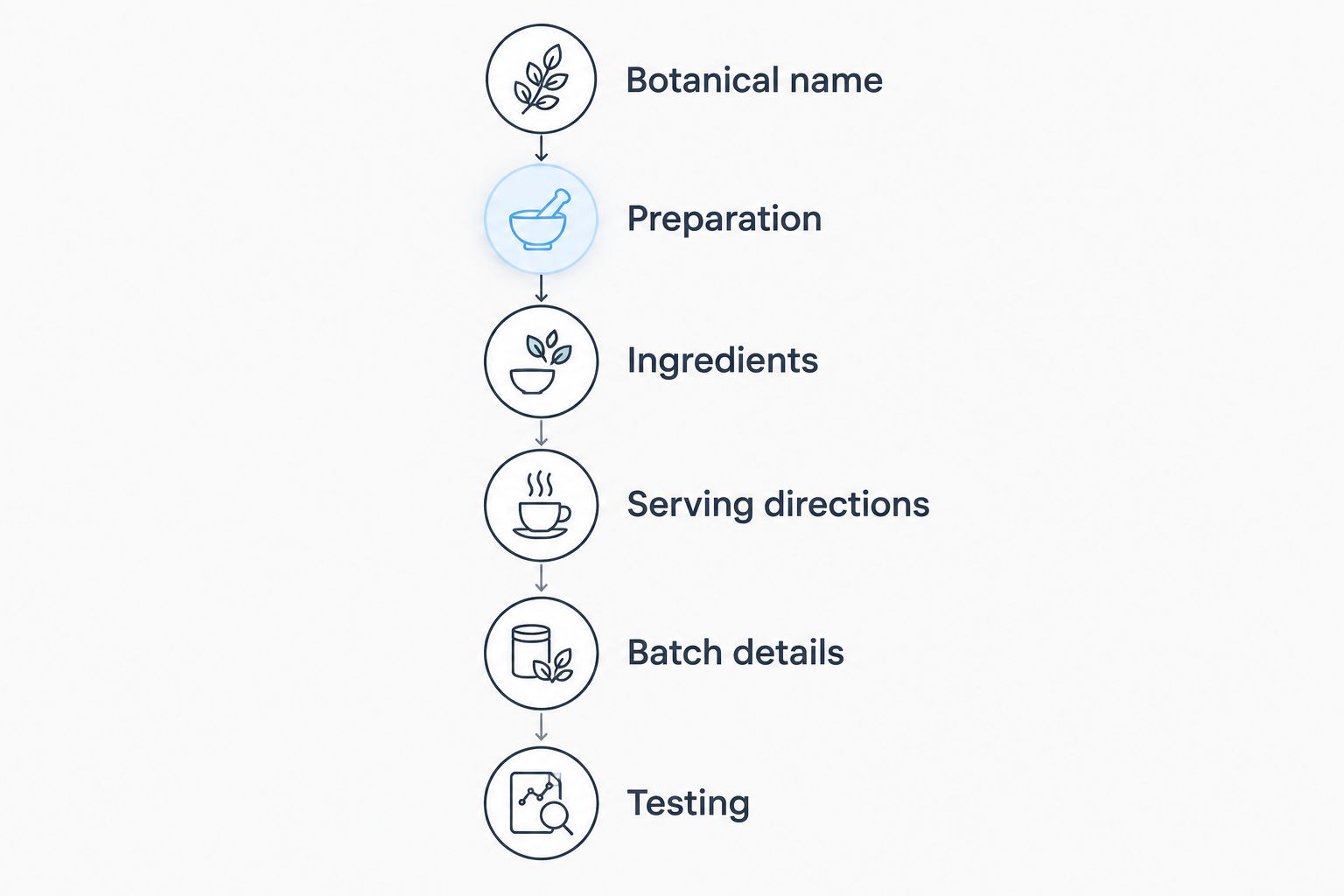
Compare labels manually before comparing brands. Look for the botanical name, preparation, serving instructions, additional ingredients and lot identification. Black seed oil, ground black seeds and concentrated extracts are different preparations; their research and serving directions are not interchangeable.
Cold-pressed describes a production method. It does not establish a particular thymoquinone concentration, clinical effect or anti-doping certification. Likewise, organic or non-GMO language does not answer every athlete-safety question.
Herbalgoodnessco offers an 8oz cold-pressed Nigella sativa oil. That gives you a specific preparation to inspect, but 8oz is the bottle size, not a serving recommendation. The product comparison below helps narrow the format; the current label supplies the actual directions.
- Botanical name: confirm Nigella sativa.
- Preparation: distinguish oil, seed powder and extract.
- Ingredients: read the full list, including capsule materials.
- Serving directions: use the exact product's label.
- Batch details: locate the lot number and expiry information.
- Testing: ask what each certificate actually measures.
Check medication and competition risks
Start with a pharmacist or sports-medicine clinician, not a supplement stack. Bring the actual label and a list of your medicines and other supplements. This lets the clinician assess the preparation you intend to use rather than an unspecified herb.
The Memorial Sloan Kettering About Herbs monograph on Nigella sativa discusses potential interactions and adverse effects, while distinguishing experimental findings from clinical evidence. That is a reason for individual screening—not permission to change medication or expect a particular effect.
For drug-tested athletes, the 2018 IOC consensus identifies supplement contamination as a concern. In 2026, verify current independent sport certification for the exact product; a general quality statement is not a substitute. Certification reduces risk but does not eliminate it.
- Ask a pharmacist to review medicines and supplements together.
- Discuss planned use if you are pregnant, breastfeeding or awaiting surgery.
- Check your federation's current supplement guidance.
- Verify any claimed certification in the certifier's own database.
- Match the listed product and batch where applicable.
- Keep the label and purchase record with your supplement log.
Introduce one preparation without changing everything else
The manual approach is simple: follow the label, keep your normal routine stable and write down what you take. Do not borrow a dose from a study that used a different extract or from another athlete's social post.
There is no established universal black seed oil dose for athletic performance. A bottle's serving instructions describe use of that product; they do not prove that the serving improves endurance or recovery.
A standalone preparation makes your routine easier to interpret than several new botanicals at once. Avoid first use immediately before a competition, a demanding workout or travel where an unwanted reaction would be difficult to manage. You do not need to take a supplement to complete this process.
- Follow the exact preparation's label directions.
- Add only one new supplement at a time.
- Keep meals and other supplements consistent during your assessment.
- Record the preparation, serving and time taken.
- Stop use and seek advice if you develop an unwanted reaction.
Track tolerance separately from performance
Use a notebook or spreadsheet before buying another monitoring tool. Record whether you took the product, how you tolerated it and what changed in training. Keep those observations separate: tolerating an oil is not evidence that it improves performance.
Your workouts also respond to sleep, weather, fueling and accumulated fatigue. If a session goes well after taking black seed oil, that sequence alone does not establish cause and effect. The same applies to a poor workout.
Choose a training measure you already use consistently. Avoid introducing a new supplement, a new workout plan and a new testing method together. A simple record with stable conditions is more useful than a collection of impressions.
- Track any nausea, reflux, rash or other unwanted symptoms.
- Record sleep and recent training load alongside supplement use.
- Use an existing pace, power or strength measure.
- Note unusual heat, illness, travel or missed meals.
- Review the record with a qualified professional when needed.
Reassess whether the supplement earns its place
Finish with a decision, not an automatic reorder. Ask whether the supplement fits your goal, whether you tolerate it and whether the evidence justifies keeping it. General wellness use remains a personal choice; a performance claim needs stronger support than a positive impression.
For your 2026 review, remove unnecessary complexity. A simpler supplement routine is easier to assess and easier to explain to a clinician or team dietitian.
Retailers and health practitioners should apply the same discipline when discussing black seed oil with athletes. Describe the preparation accurately, distinguish traditional use from research and avoid turning laboratory findings into promises about training results.
- Keep only products with a clear purpose in your routine.
- Recheck the label when the formulation changes.
- Confirm testing details rather than repeating a broad quality claim.
- Document unwanted effects and discontinue unnecessary additions.
- Refer medical and sports-performance questions to qualified professionals.
Compare black seed oil options for athletes
Best for a first assessment: a standalone preparation—or no supplement. Capsules offer convenience, while multi-botanical bundles add ingredients that make individual tolerance harder to interpret. No format establishes a performance benefit by itself.
| Option | Best for | Practical advantage | Key limitation |
|---|---|---|---|
| Cold-Pressed Nigella Sativa Black Seed Oil | Shoppers who prefer liquid oil | A standalone preparation to inspect and assess | Taste and measuring matter; the product details supplied do not establish sport certification |
| Black seed oil capsules | Athletes who prefer a measured capsule format | Avoids measuring liquid oil | Oil amount, capsule ingredients and testing vary by product |
| Oregano Oil + Black Seed Oil Bundle | Shoppers intentionally considering both botanicals | Groups the two botanicals in one purchase | Not the simplest starting point for assessing black seed oil alone |
| No botanical supplement | Athletes prioritizing fueling and a simpler routine | Adds no new supplement ingredients | Does not meet a personal preference to try black seed oil |
Herbalgoodnessco black seed oil offers a relevant liquid option; its limitation for athletes is that the supplied product information does not establish an athletic-performance benefit or independent sport certification. Ask for those details rather than assuming them from wellness language.
The cards below show the standalone oil and the related bundle. Prefer the standalone oil if your purpose is to evaluate black seed oil itself. A bundle is not evidence that taking both botanicals improves training outcomes.


Common mistakes athletes make with black seed oil
Treating antioxidant research as a recovery guarantee
A laboratory finding does not establish less soreness, better adaptation or faster recovery in athletes. Check the participants, preparation and measured outcome before applying a study to your training.
Assuming cold-pressed means cleared for competition
Cold-pressed describes processing, not anti-doping testing. Drug-tested athletes need current, product-specific verification rather than an inference from the label's quality language.
Starting several botanicals during a hard training block
Adding black seed oil, oregano oil and other supplements together makes unwanted effects harder to trace. Introduce fewer variables, especially when training stress is already changing.
Using wellness claims to explain persistent symptoms
Repeated fatigue, dizziness, pain or breathing difficulty deserves clinical assessment. Do not use black seed oil to delay care or compensate for inadequate food and recovery.
Treating a bottle size as a dose
An 8oz bottle tells you how much oil the container holds. It does not tell you how much to take, and it does not establish an athlete-specific serving.
FAQ
Is black seed oil good for athletes?
Black seed oil is an optional general-wellness supplement, not an established athletic-performance aid. Assess the exact preparation, your health circumstances and competition requirements before adding it.
Does black seed oil help muscle recovery?
Black seed oil does not have established evidence for dependable muscle-recovery benefits in athletes. Laboratory findings about antioxidant or inflammatory pathways do not prove less soreness or better training adaptation.
How much black seed oil should an athlete take?
There is no established universal black seed oil dose for athletic performance. Follow the exact product's label and discuss suitability with a pharmacist, clinician or sports dietitian rather than copying a dose from a different preparation.
Should I take black seed oil before or after a workout?
No established athlete-specific timing protocol shows that taking black seed oil before or after a workout improves results. Follow the product directions and avoid first use before a demanding session or competition.
Is liquid black seed oil better than capsules for athletes?
Neither liquid oil nor capsules are established as better for athletic performance. Liquid oil requires measuring and has a noticeable taste; capsules offer convenience but differ in oil amount and additional ingredients.
Can drug-tested athletes take black seed oil?
Drug-tested athletes should assess the exact product's ingredients and independent sport certification before use. General quality claims do not establish anti-doping safety, and certification reduces rather than eliminates contamination risk.
Can I combine black seed oil with oregano oil?
Combining black seed oil with oregano oil adds another botanical that needs its own safety assessment. Review both labels with a pharmacist and avoid starting both together if you want to understand individual tolerance.
Can black seed oil replace sports nutrition or medical care?
Black seed oil cannot replace adequate fueling, recovery habits or medical care. Persistent symptoms need professional assessment, and training nutrition should remain the foundation of an athlete's routine.
One last thing
The word antioxidant is not a performance result. A study needs to measure a relevant athletic outcome before it can support a claim about your training.
For 2026, ask one question before adding black seed oil: What decision would this evidence change? If the answer is only a general wellness preference, keep the claim at that level—and keep your sports-nutrition foundations intact.